

Defy the Heat. Master the Flow
Eliminate thermal bottlenecks before they even reach the prototype stage. Tailored for massive energy capacities and brutal ambient climates, our bespoke liquid cooling solutions merge multi-physics simulations with world-class CNC routing. Whether your architecture demands high-pressure extrusion profiles or ultra-thin blown multi-channel designs, we guarantee zero-leakage reliability, optimal heat exchange rates, and unquestionable scale-up readiness.
Master the Heat. Eliminate Thermal Runaway
Precision-engineered liquid cooling plates designed to maintain your cell chemistry within an optimal ΔT of ≤ 2°C — even under extreme operating conditions. From micro-channel design to full thermal system integration, we ensure stable, safe, and efficient heat dissipation.
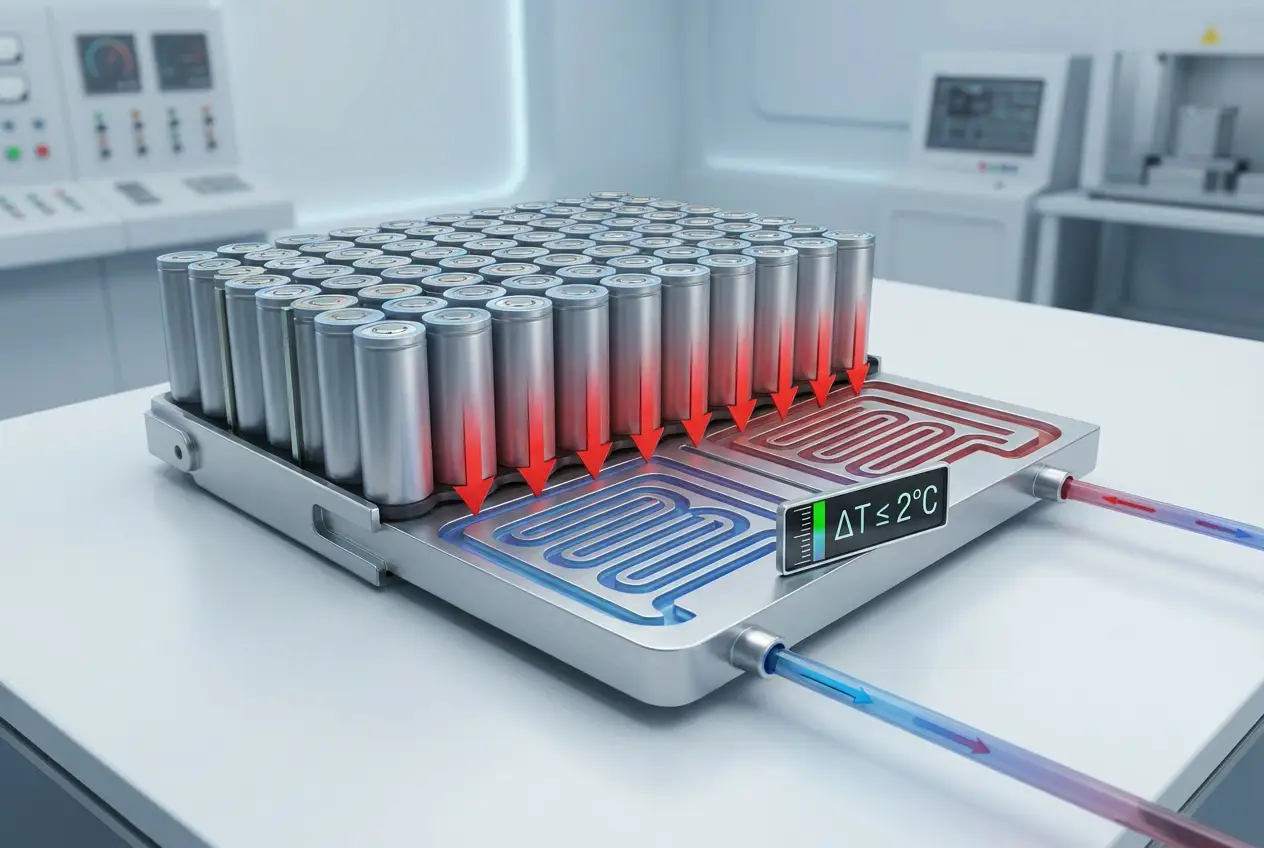
Advanced Thermal Architecture: Engineering the Perfect Flow
We don’t just pump coolant; we choreograph it. From 800V silicon-carbide architectures to extremely dense CTP (Cell-to-Pack) layouts, our customized flow channels ensure unprecedented thermal homogenization.
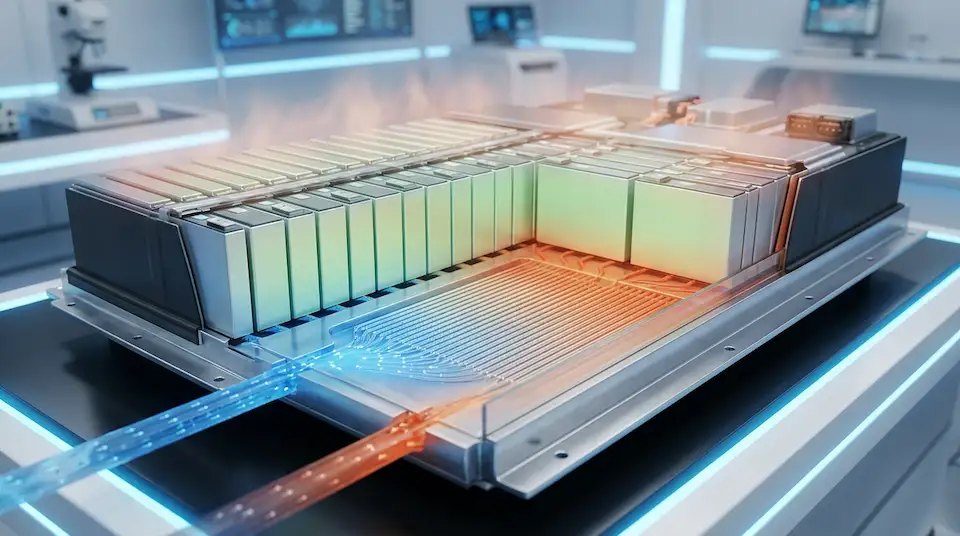
🔬 Micro-Channel Dynamics
Utilizing precision-extruded or delicately stamped micro-channels to maximize the heat transfer surface area. Crucial for massive localized heat rejection during high C-rate discharging (e.g., Heavy-Duty commercial vehicles).

🔄 Optimized Flow Distribution Strategy
Intelligently balancing pressure drops across parallel and series fluid paths to eliminate thermal bottlenecks. We deliver highly consistent temperature gradients across the entire array, keeping cell-to-cell ΔT (Delta T) ≤ 2°C.

🧩 Cell-Agnostic Thermal Interfaces
Whether dealing with bottom-cooled prismatic cells, side-cooled cylindrical arrays (e.g., 4680), or serpentine ribbon cooling for pouches, our architectures adapt completely to your chosen form factor.
Simulation & Modeling
We don’t rely on trial-and-error manufacturing. Every cold plate is validated in a virtual environment before production, undergoing thousands of simulation iterations to ensure optimal thermal performance.
Measure Twice in the Virtual World. Cut Once in Reality.
Thousands of digital simulations enable a single precise physical realization.

Flow Path Simulation
Digital coolant-flow modeling verifies channel behavior, flow distribution, and hydraulic balance before any plate enters production.
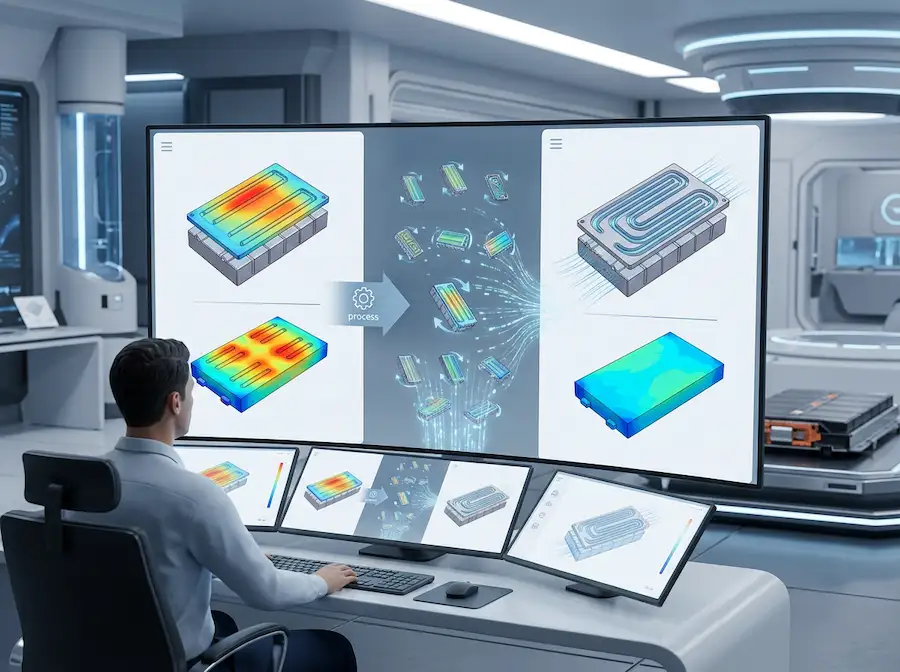
Thermal Uniformity Analysis
By modeling heat generation rates, we optimize internal channel designs to keep pack temperature variation below ΔT ≤ 2°C across the system.
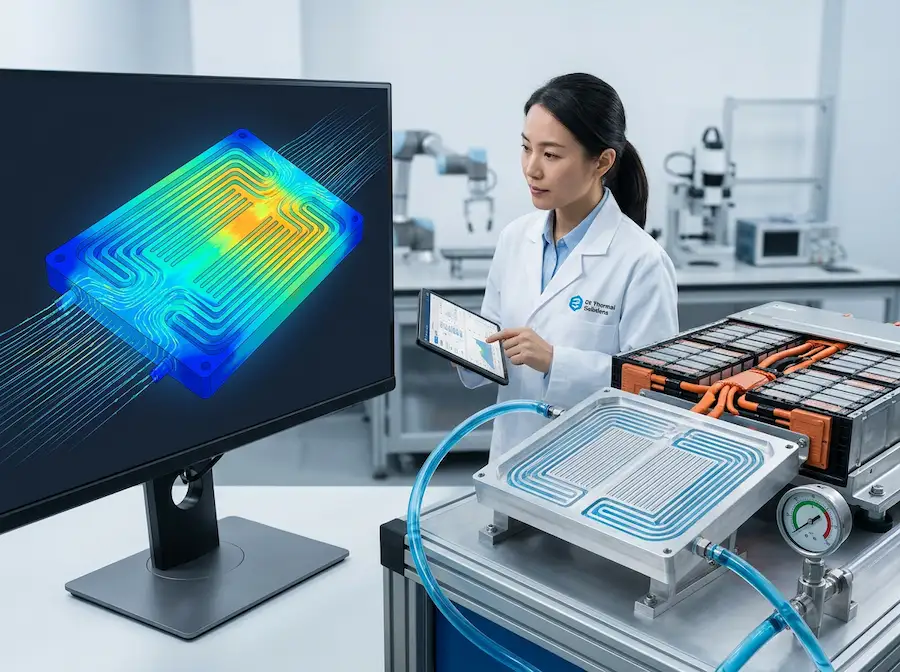
Pressure Drop Optimization
Accurate pressure-flow modeling prevents pump overload while balancing heat-transfer efficiency and overall energy consumption.
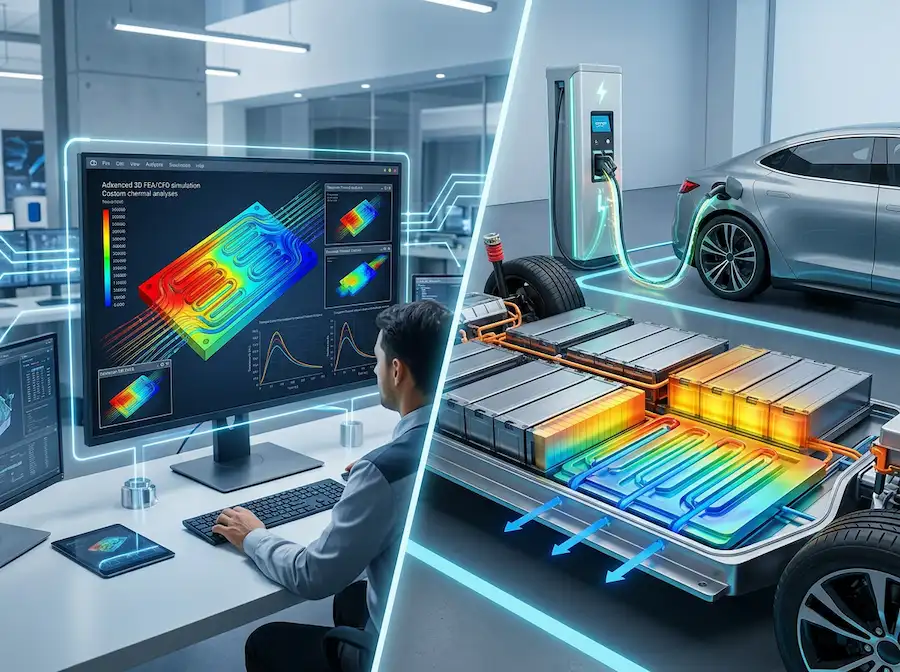
Transient Thermal Response
Dynamic simulations of fast charging and high C-rate discharge ensure stable thermal control under short-term peak loads.
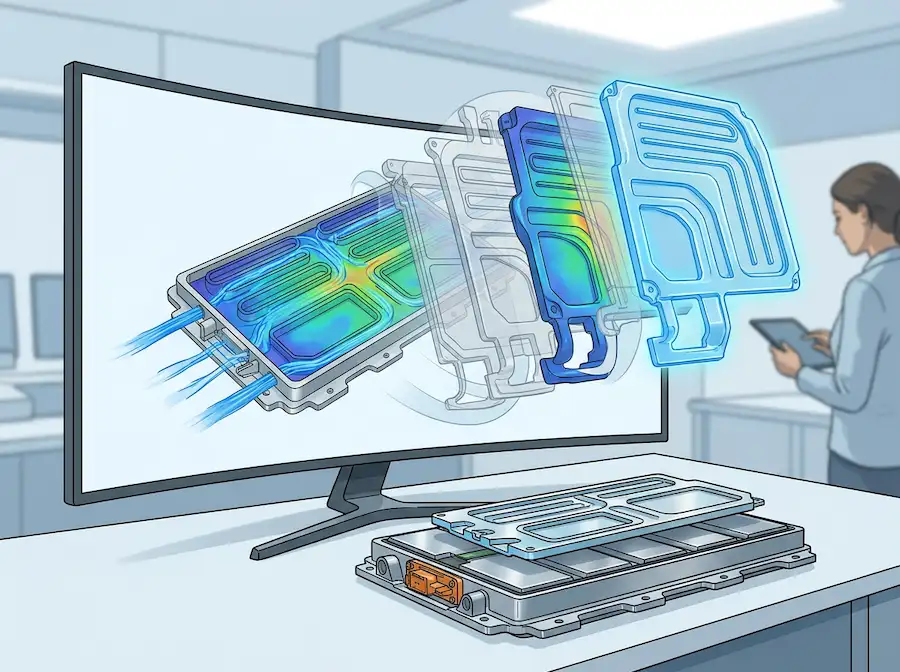
Design Iteration Efficiency
Thousands of digital iterations reduce trial-and-error manufacturing and accelerate the path from concept validation to production release.
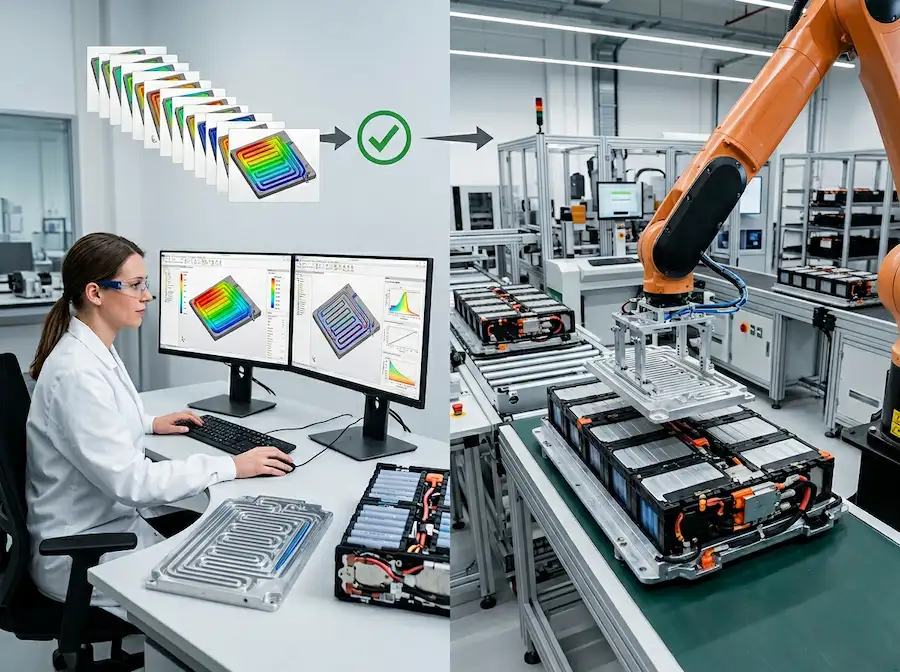
Production-Ready Validation
Virtual validation supports manufacturable, repeatable cooling plate designs that transition cleanly into real-world production workflows.
The Pack-Level Impact: Why Chemistry Needs Our Engineering
When thermal management is flawlessly engineered, your cells perform beyond their baseline. Here is how our cold plates directly impact your bottom-line pack specifications.
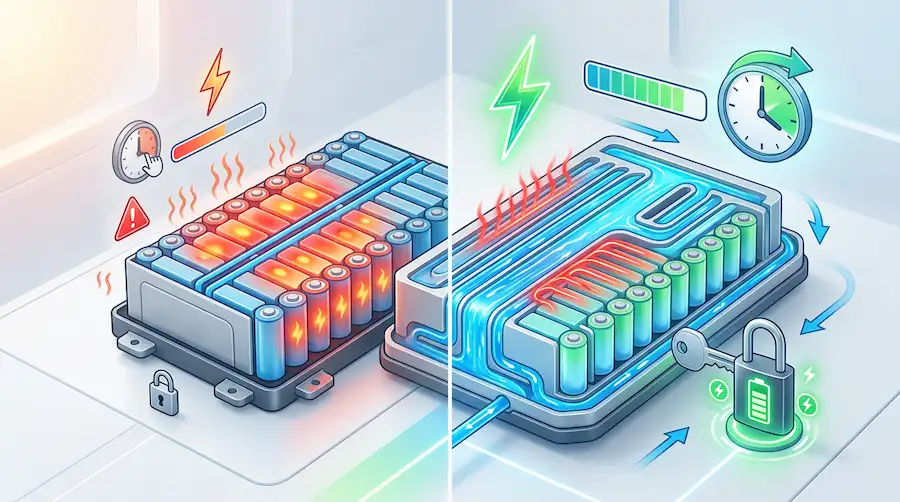
⚡ Unlocking Ultra-Fast Charging
Dissipating immense thermal loads generated during 3C/4C mega-watt charging sessions ensures your vehicle or machine gets back to work in minutes, safely.

⏳ Exponential Cycle Life Extension
By preventing localized hot spots and maintaining ideal operating thresholds (typically 25-35°C), we dramatically slow down lithium-ion degradation, extending the commercial lifecycle of your packs.
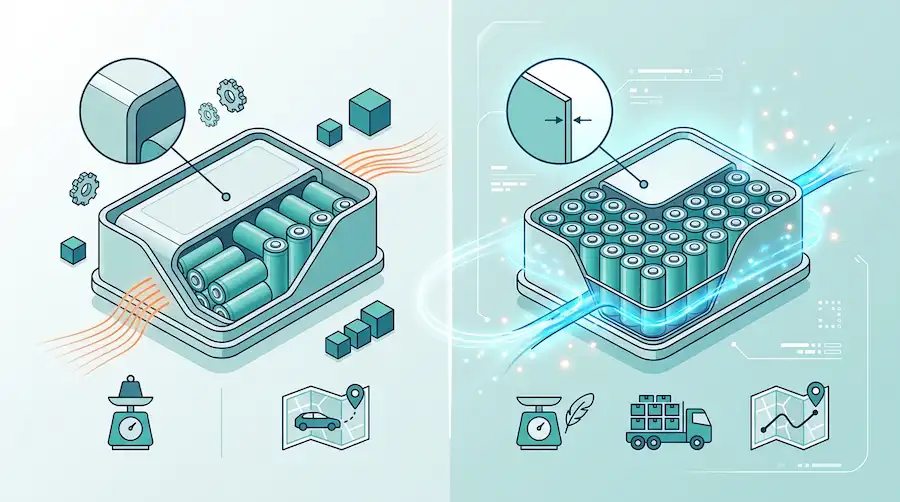
⚖️ Extreme Weight-to-Thermal Ratio
Utilizing ultra-thin wall thicknesses (down to 1.0mm) without compromising structural burst pressure. Less cooling hardware weight means more payload capacity for active cell chemistry and greater range.
The Material DNA
Material engineering is a discipline of precision. Our alloy selection strategy reflects deep application-specific expertise, ensuring every solution is built on the right material foundation for its operational environment.
The Right Alloy for the Right Battlefield.
Precision alloy selection tailored to real-world operating conditions.
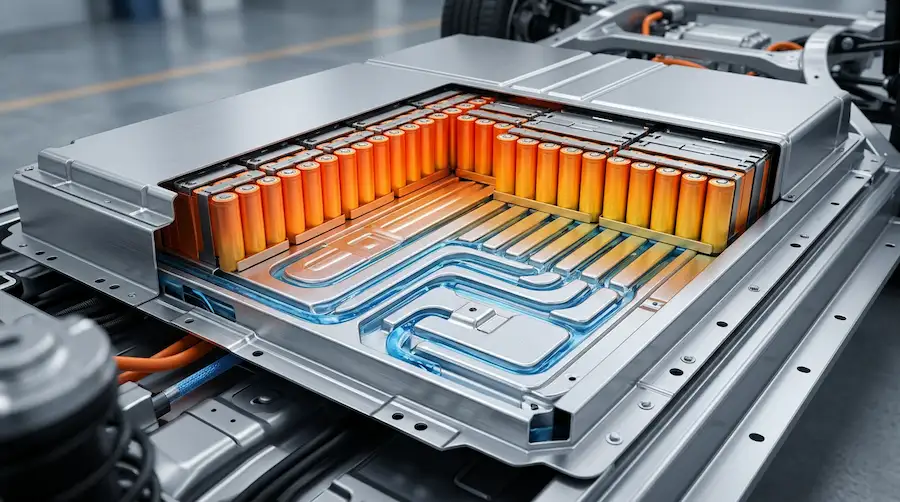
AL 5052— The Formability & Fatigue Workhorse
With outstanding stampability, elongation, and cold-forming performance, Al 5052 is ideal for thin, lightweight cold plate structures. It's widely used for two-piece stamped-and-joined (welded) liquid cold plates, delivering strong corrosion resistance and reliable fatigue strength--a highly cost-effective choice for high-volume platforms.
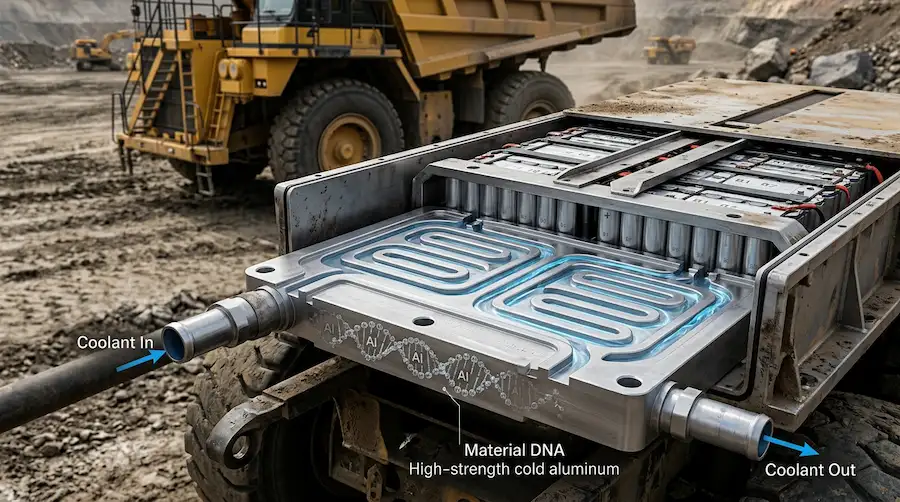
AL 6061 — The Sweet Spot of Strength & Machinability
Known for its high yield strength and excellent machinability, Al 6061 is a go-to alloy for structural cold plates. It can handle the combined demands of heavy battery-module loads, mechanical shock, and high-frequency vibration often seen in commercial and off-road duty.
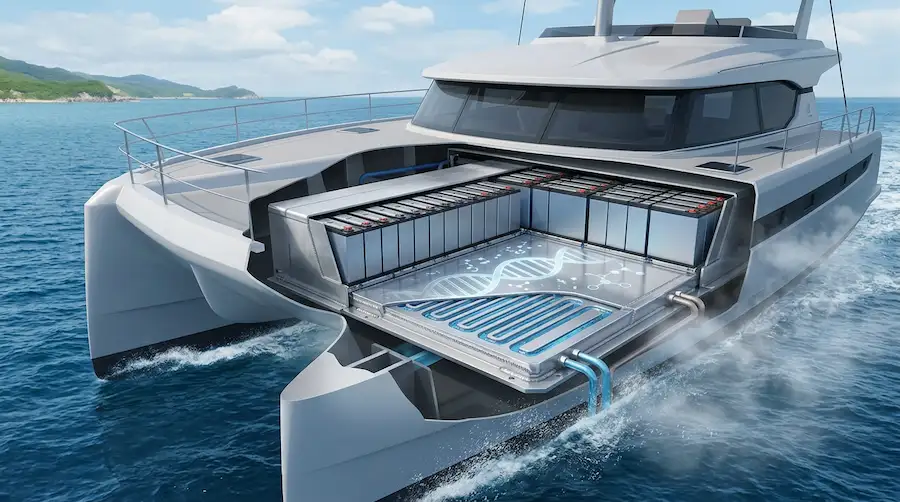
AL 5083 — The Marine-Grade Corrosion Shield
Often regarded as true “marine-grade aluminum,” Al 5083 excels in salt fog, high humidity, and even direct seawater exposure. With top-tier corrosion resistance and strong weldability, it’s an ideal material for marine battery pack baseplates and cold plate assemblies operating in the harshest coastal and offshore environments.
Manufacturing Process Showdown
This is where engineering expertise truly matters. No single process is universally perfect — we guide you toward the optimal engineering trade-off based on your application requirements.
Solid-State vs. Vacuum — Engineering the Perfect Seal
Friction stir welding or vacuum brazing? We engineer the sealing solution, not just the process.
| Criteria | Friction Stir Welding (FSW) ⚙️ | Vacuum Brazing 🔥 |
|---|---|---|
| Working Principle | A high-speed rotating tool generates frictional heat, plasticizing the aluminum and forming a solid-state bond without melting (solid-phase welding). | Components are heated in a vacuum furnace, where filler material melts and flows into joints via capillary action, forming a metallurgical bond upon cooling. |
| Channel Complexity | Best suited for regular geometries and large-scale channels, typically machined via CNC (e.g., milled flow paths in thick plates). | Enables highly complex micro-channel structures and dense flow path designs that are difficult to machine. |
| Structural Strength | Exceptional mechanical strength, with weld joints reaching over 90% of base material strength. Ideal for structural cold plates in heavy-duty applications. | Relatively lower structural strength, better suited for lightweight designs where the cold plate is integrated within battery modules or packs. |
| Size & Scalability | Not limited by furnace size — capable of producing ultra-large cold plates exceeding 2 meters in length. | Constrained by vacuum furnace dimensions, typically suitable for standard automotive or module-level sizes. |
| Our Advantage | Equipped with heavy-duty FSW production lines, enabling both standardized and large-scale customized cold plate welding solutions. | Strong supply chain integration for vacuum brazing, ensuring high consistency and reliable mass production quality. |
Relentless Testing & Validation
For global OEM clients, coolant leakage is a critical failure point — often the root cause of system breakdown. Our QA philosophy is uncompromising: every product is validated under extreme conditions to ensure absolute reliability.
Zero Tolerance for Leakage. Tested Beyond Limits.
Absolute sealing integrity, proven through rigorous, beyond-spec validation systems.
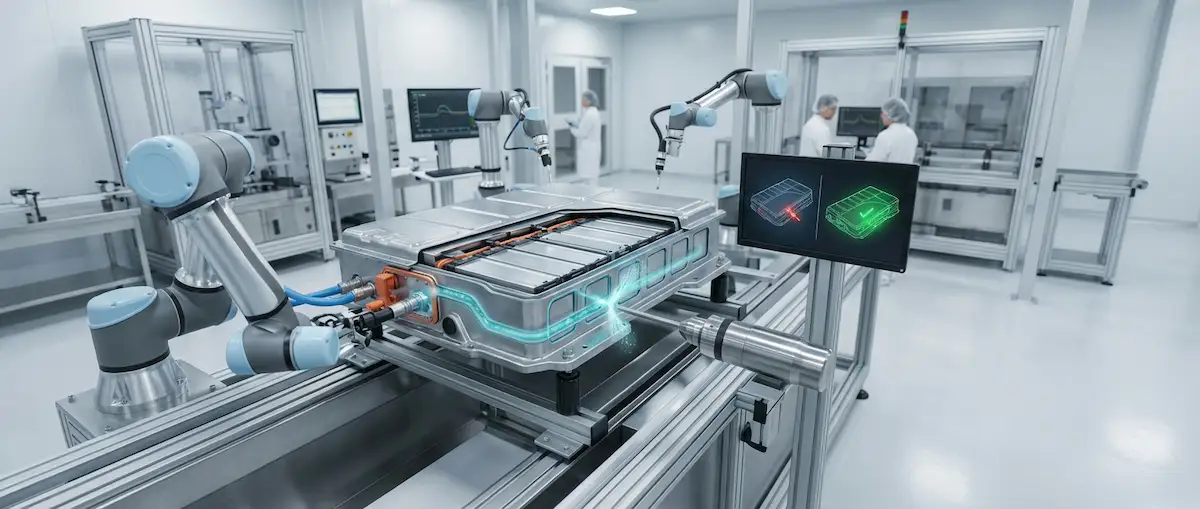
🔬Helium Leak Detection
Vacuum Helium Leak Test, 10⁻⁶ Pa·m³/s
We do not rely on conventional water immersion tests. Every cold plate undergoes 100% vacuum-chamber helium leak detection before shipment, reliably capturing micron-level porosity and pinholes that are invisible to the naked eye—delivering medical-grade hermetic integrity.
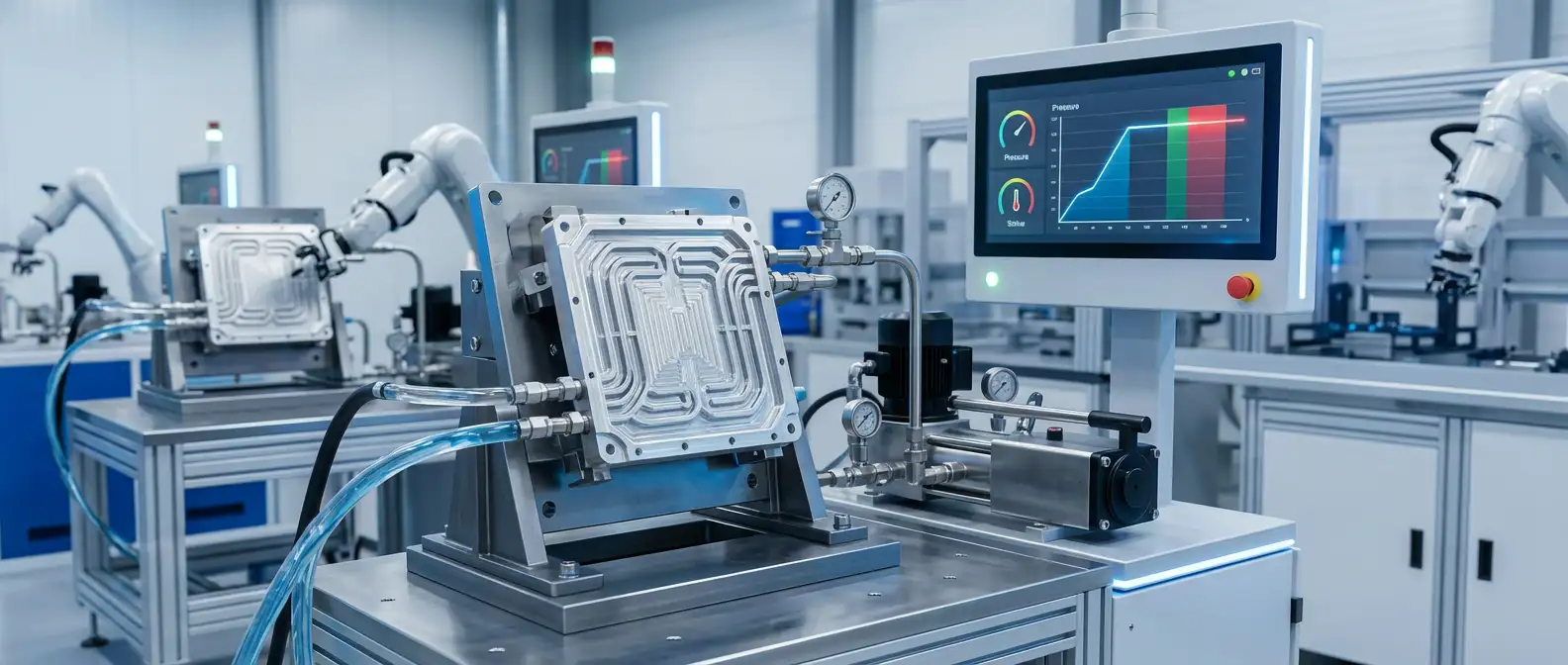
💥 Burst & Static Pressure Test
≥1 MPa Overload Testing
The internal flow channels are pressurized well beyond actual operating conditions—typically several times the working pressure (e.g., ≥1 MPa)—to ensure the plate will not bulge or rupture even in fault scenarios such as valve malfunctions or line blockages.
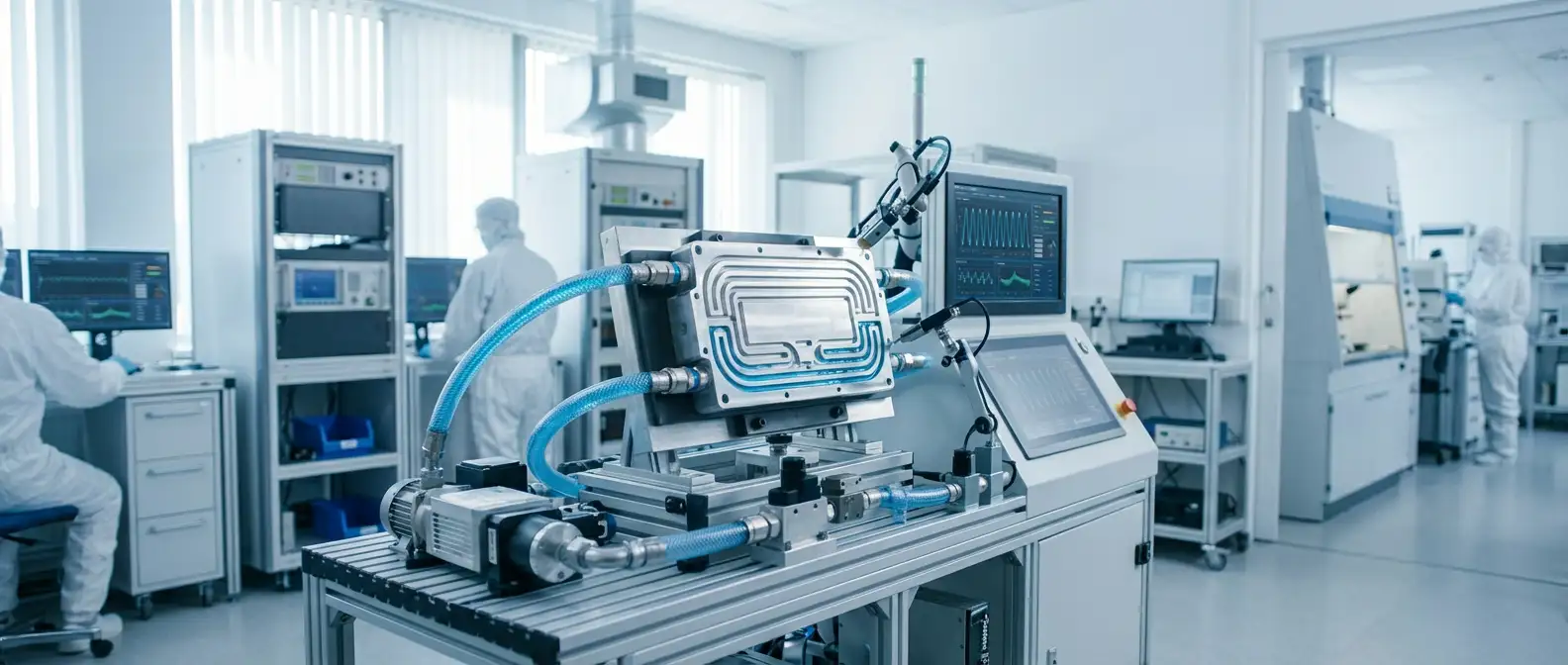
🔄Pressure Pulsation Cycle Test
100,000+ Cycles
We replicate “water hammer” events caused by pump start/stop cycles and abrupt flow transients over the product’s service life. The cold plate is subjected to hundreds of thousands of high/low pressure cycles (e.g., 100,000 cycles) to verify weld durability and prevent fatigue cracking.

❄️🔥Thermal Shock Test
-40°C to +85°C Cycling
Cold plates filled with coolant are rapidly cycled between -40°C and +85°C (e.g., 30-minute dwells at each extreme with rapid transitions) to validate structural and weld stability under aggressive thermal expansion and contraction.
Precision Scale-Up: From Tooling to Mega-Volume
Brilliant thermal designs mean nothing if they leak. Utilizing China's hyper-advanced manufacturing ecosystem, we bridge NPI prototypes to high-volume assembly with uncompromising dimensional and sealing integrity.
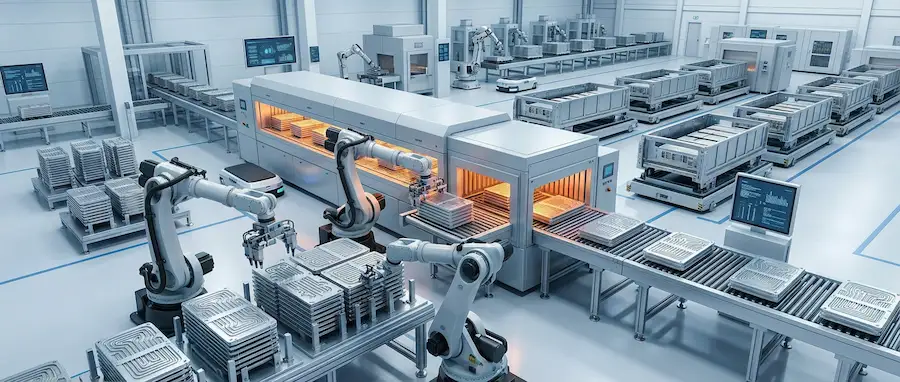
🔥 CAB Brazing Arrays
High-capacity Continuous Braze Furnaces delivering pristine, flux-free joints for complex multi-layer stamped cold plates. Ensuring absolute structural fusion with zero micro-cracks.
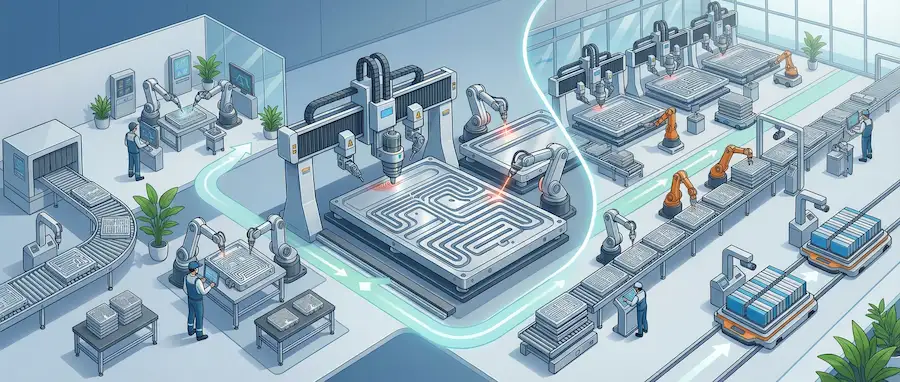
🛠️ Heavy-Duty FSW & Laser Centers
Automated Friction Stir Welding (FSW) dedicated to massive extruded liquid-cooled structural trays (CTP), alongside robotic laser welding cells for precise aluminum-alloy marrying with minimal heat-affected zones.

🛡️ 100% In-Line Leak Diagnostic Network
Every single cold plate exiting the line undergoes rigorous pressure decay and Vacuum Helium Mass Spectrometry tests. We measure leak rates down to 1.0×10⁻5 mbar·L/s—guaranteeing fluid isolation for the entire life of the pack.
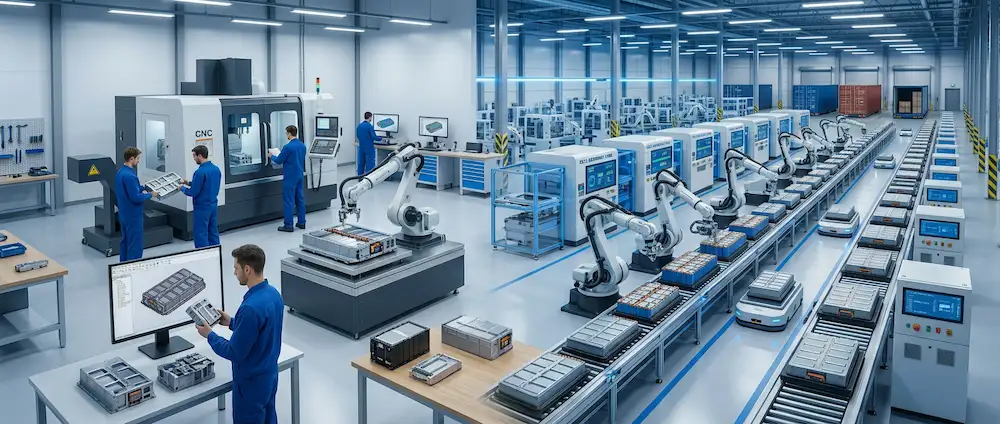
⏱️ Agile NPI & Rapid Tooling
Extensive in-house tooling capabilities drastically reduce development lead times. We bring your CFD-validated designs to functional physical prototypes in unmatched timeframes.
The Ecosystem Edge
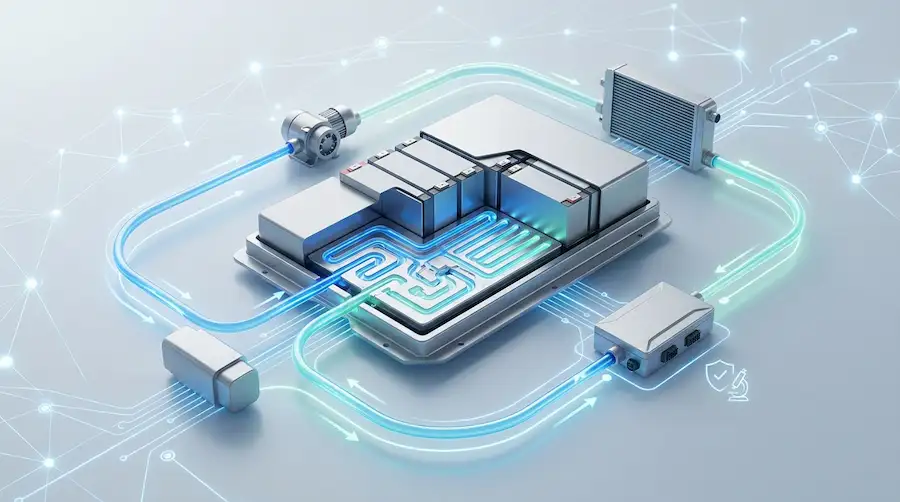
Beyond delivering world-class cold plates, we enable seamless integration across the entire thermal management system. Leveraging China’s robust new energy supply chain, we ensure our solutions connect effortlessly within your ecosystem.
Seamlessly Integrated with Top Thermal Management Ecosystems
Engineered not just as components, but as fully compatible system solutions.
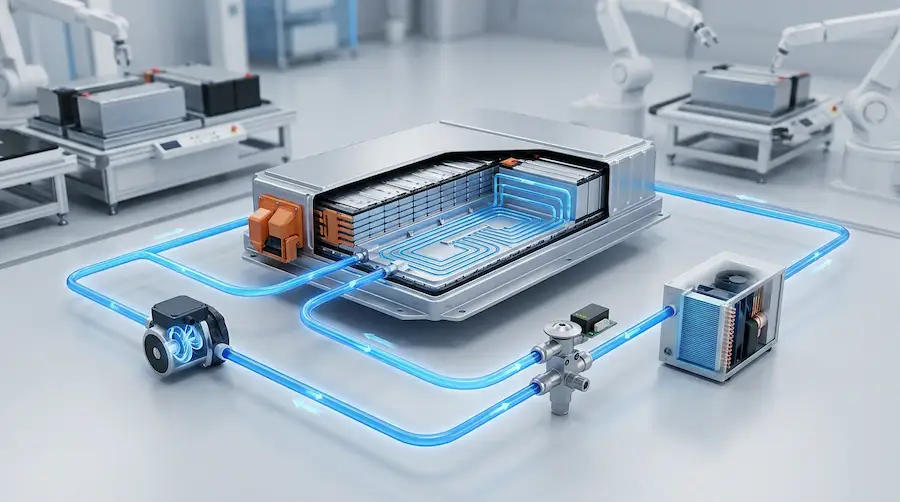
Thermal Component Compatibility
Direct integration with EXV valves, pumps, and chiller systems from leading suppliers such as Sanhua and Yinlun, ensuring seamless system-level performance.
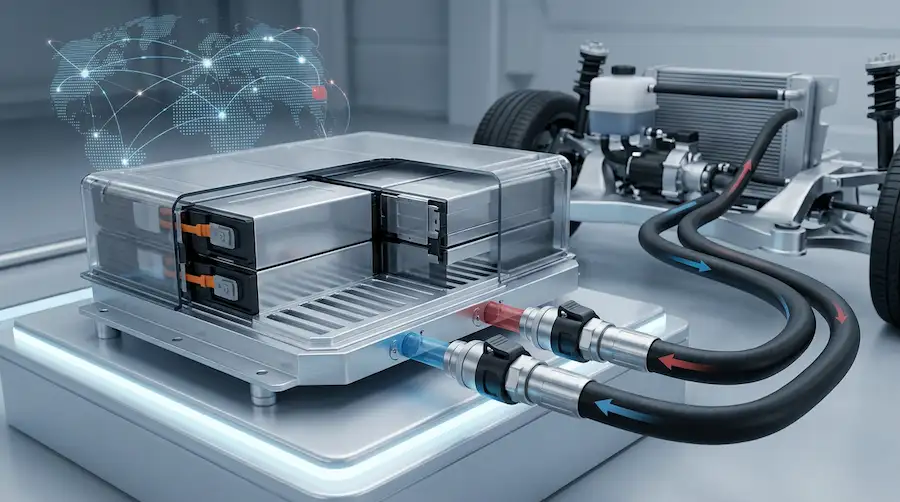
Piping & Connector Ecosystem
Fully compatible with EPDM / TPV coolant hoses and standardized quick connectors, enabling fast, reliable, and leak-free system integration.
Compliance & Validation Standards
Designed to meet global standards such as GB 38031 and ISO 16750, with validation performed by CNAS-certified third-party laboratories and globally recognized reports.
Project Cases
Real-world implementations showcasing our liquid cooling plate solutions across diverse applications.
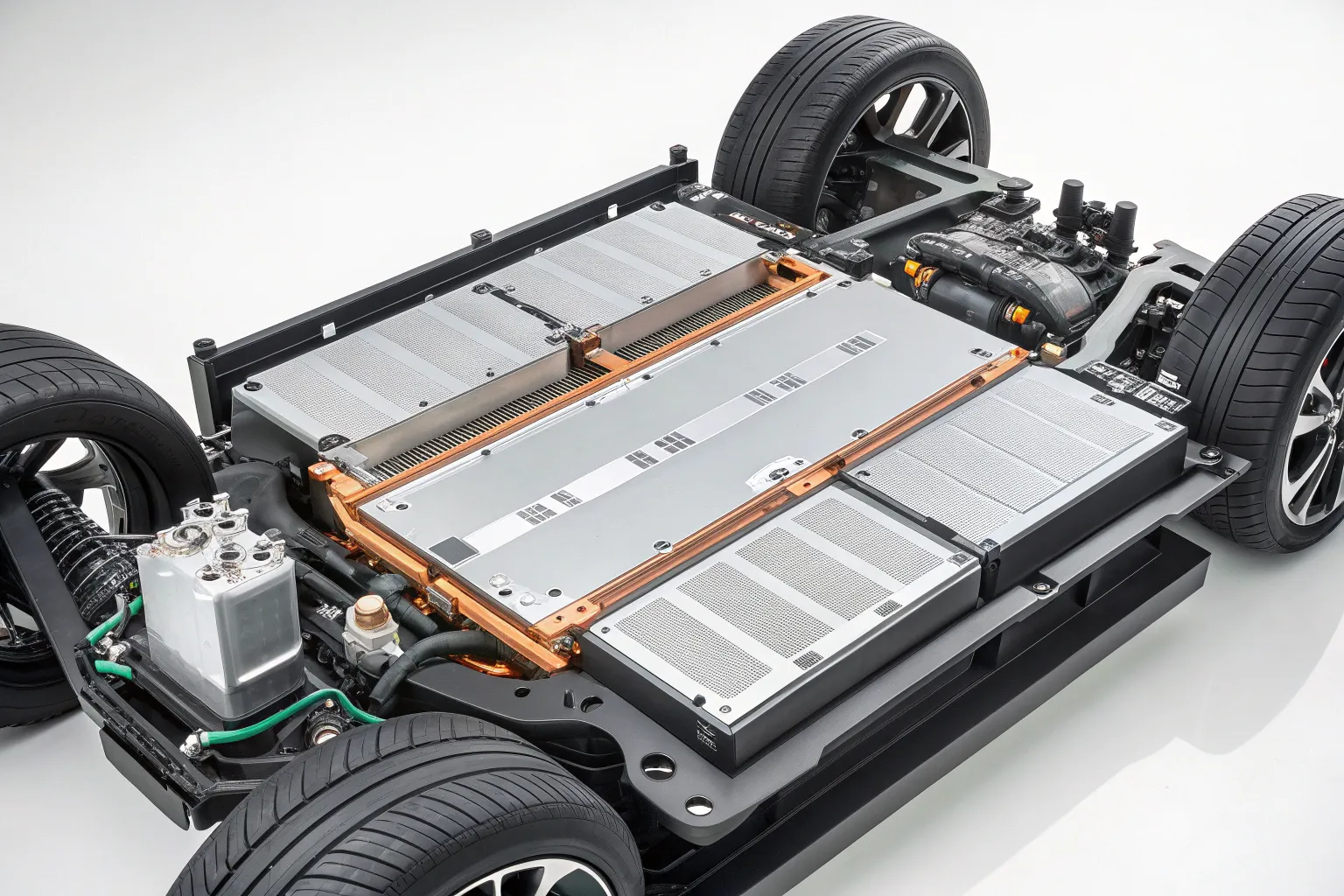
High-Performance EV Battery Cooling
Developed custom liquid cooling plates for a premium European electric vehicle manufacturer, achieving 30% better thermal performance compared to previous solutions.
- FSW welding for leak-proof joints
- ±0.03mm flatness tolerance
- 2500 units annual production
Fluid Dynamics Don't Lie. Let's Optimize Your Pack
Stop wasting iteration cycles gambling on pressure drops, unmapped flow resistance, or fatal leakage liabilities. Upload your preliminary cold plate CAD/3D arrays, or simply share your cell arrangement matrix and peak heat generation metrics. Within 48 hours, our thermal engineering task force will evaluate your inputs and deliver a diagnostic roadmap—detailing optimal routing topology, substrate matching, and the definitive manufacturing process (Friction Stir Welding vs. Vacuum Brazing) dictated by your specific cycle loads.
Contact
Typical Timeline
Secure & Confidential
All drawings and project data are handled under strict NDA protection.
Ask For A Quick Quote
Wonderful, you have made the right choice. We will never let you down!
We will contact you within 2 hours of working days, please pay attention to the email with the suffix “@astraiondynamics.com”.
