

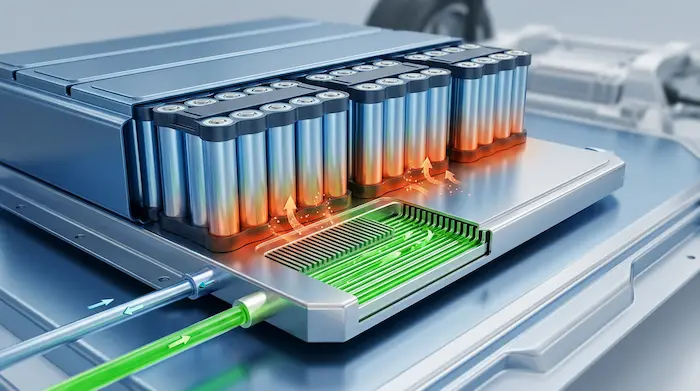
Struggling to keep your high-density battery packs cool under extreme loads? Thermal management can make or break your electric vehicle, marine vessel, or energy storage project. I’ve spent years integrating complex battery systems, and today, I’ll show you exactly how micro-channel cold plates solve this massive engineering headache.
A micro-channel cold plate is a highly efficient liquid cooling component used in advanced thermal management systems. It features internally machined, extremely narrow fluid pathways (typically less than 1mm to 3mm wide) that maximize the surface area in contact with a coolant. As the fluid passes through these intricate channels, it rapidly and uniformly absorbs and dissipates heat from high-power electronics, battery modules, or electrical components attached to the plate’s surface.
But how do you design, manufacture, and rigorously test these plates to guarantee they won’t leak or fail in the field? Let’s dive deep into the engineering details.
What is the Micro-Channel Cold Plate used for?
If you are developing battery-powered mobility or industrial platforms, you already know that lithium-ion cells are highly sensitive to temperature.
Micro-channel cold plates are primarily used to extract massive amounts of heat from densely packed energy systems. We frequently see them utilized in:
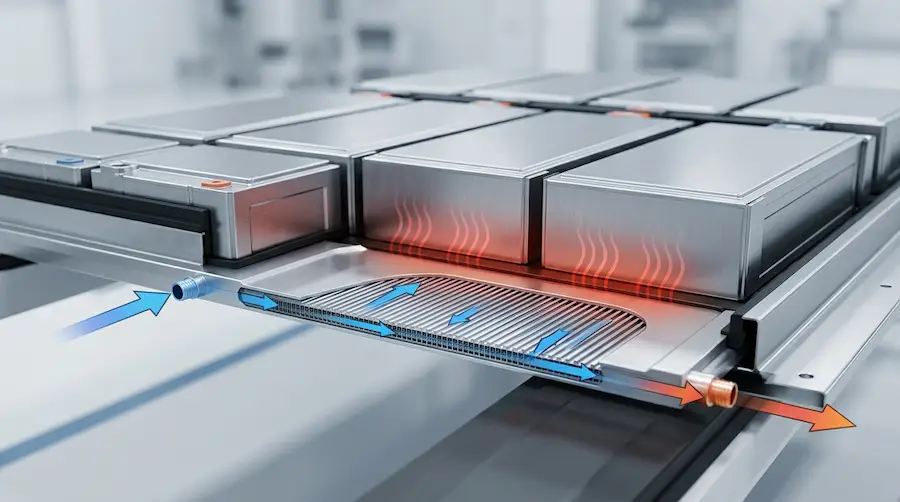
Heavy-Duty Electric Vehicles: Electric trucks and mining vehicles demand highly reliable, heavy-duty battery systems that can handle extreme continuous discharge rates.

Marine Vessels: Electric boats and ferries have stringent requirements for liquid cooling and system integration to maintain safety on the water.
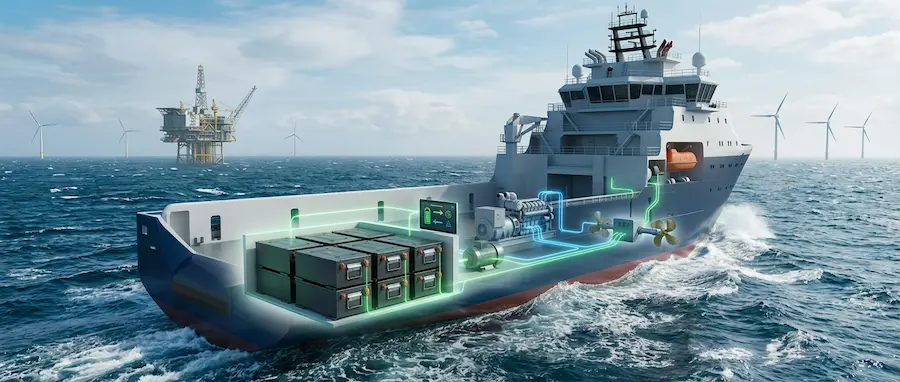
Off-Highway Equipment: Electric tractors and agricultural machinery require customized battery packs and robust liquid cooling systems to operate in harsh environments.

Energy Storage Systems (ESS): Large-scale ESS projects require precision thermal management to maintain cell life across thousands of cycles.
Here is the reality of the supply chain: Tier-1 cell manufacturers are built for massive standard volume and often reject deep customization for specialized fleets. They sell you the raw modules, but they leave you with a massive engineering headache. How do you cool them? How do you package them safely?
That is exactly where precision liquid cold plates step in. They bridge the gap between raw cell chemistry and your customized vehicle, acting as the thermal foundation of your battery pack.
How does the Micro-Channel Cold Plate work?
The physics behind a micro-channel cold plate comes down to two primary heat transfer mechanisms: conduction and convection.
Conduction: Heat generated by the battery cells or high-voltage components transfers into the metal surface of the cold plate.
Convection: As the coolant flows through the internal micro-channels, the heat transfers from the channel walls into the moving fluid.
The magic is in the flow rate and the channel geometry. By forcing the coolant through micro-channels, we artificially increase the velocity of the fluid and create turbulent flow.Turbulent flow constantly mixes the fluid, preventing a boundary layer of hot stagnant liquid from forming against the metal walls. This drastically increases the Heat Transfer Coefficient (HTC), allowing the plate to pull heat away much faster than standard cooling tubes.
What does the Micro-Channel Cold Plate consist of?
A high-performance cold plate isn’t just a hollow box. It is a highly engineered assembly. Typical components include:
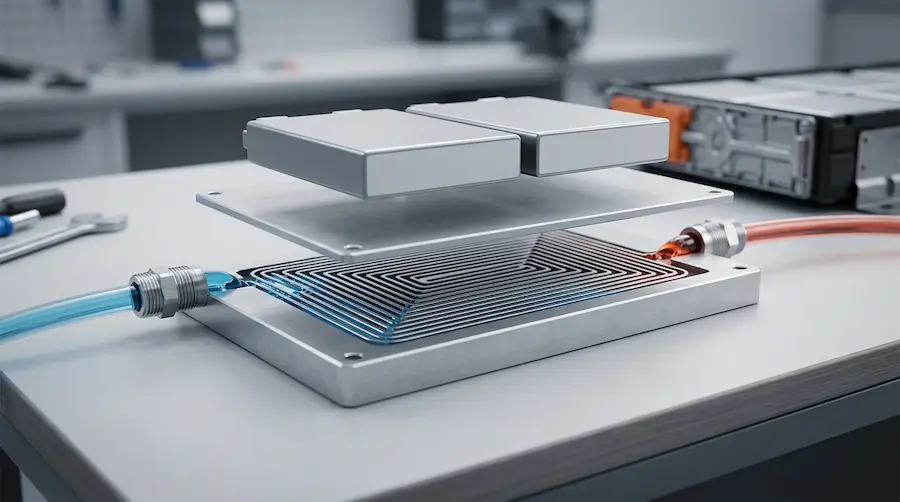
Base Plate: The bottom section into which the intricate channel labyrinth is usually machined.
Cover Plate: A flat top sheet that seals the channels.
Internal Fins/Micro-Channels: The physical barriers that guide the fluid and maximize surface area.
Inlet and Outlet Ports: Engineered fittings (like quick-disconnects or threaded nozzles) where the coolant enters and exits.
Material Selections
When it comes to Material Selections, aluminum is the undisputed king. We almost exclusively use Aluminum 6061 or 3003 series for battery cold plates.
Why aluminum?
It offers excellent thermal conductivity (around 167-205 W/m·K).
It is lightweight, which is critical for maintaining your vehicle’s payload capacity.
It is highly machinable and perfectly suited for advanced welding techniques.
While copper has better thermal conductivity, it is incredibly heavy and far too expensive for large-scale EV battery pack integration.
What’s the coolant of the Micro-Channel Cold Plate?
You might be wondering, what exactly runs through these tiny channels?
In the vast majority of electric vehicle and marine applications, the coolant is a mixture of Ethylene Glycol and Water (EGW) or Propylene Glycol and Water (PGW). Typically, this is a 50/50 mix.
Water has phenomenal heat capacity, meaning it absorbs a lot of heat before its temperature rises. However, pure water causes corrosion and freezes at 0°C. By adding glycol, we drop the freezing point to around -35°C and raise the boiling point, ensuring the coolant doesn’t freeze and burst the cold plate during a harsh winter deployment.
What are the advantages and disadvantages of the Micro-Channel Cold Plate?
Let’s be objective. Micro-channel cold plates are fantastic, but they aren’t perfect for every single application. You need to weigh the pros and cons.
The Advantages:
Incredible Thermal Performance: The immense surface area allows for superior heat dissipation, keeping cell temperature deltas within a tight 2°C to 3°C window.
Compact Form Factor: They handle high heat fluxes without taking up vertical packaging space, leaving more room for battery cells.
Structural Integrity: When engineered correctly, the cold plate can act as a load-bearing structural member of the battery enclosure.
The Disadvantages:
High Pressure Drop: Because the channels are so small, the fluid resistance is high. This means you need a more powerful, energy-consuming water pump to push the flow rate.
Clogging Risks: If there is any particulate debris in your coolant loop, micro-channels can easily clog, causing localized “hot spots.”
Manufacturing Complexity: Cutting microscopic channels and sealing them without leaks requires high-end machinery and strict quality control.
How to design the Micro-Channel Cold Plate?
Designing a micro-channel cold plate is an exercise in balancing thermal requirements against pressure constraints.
Thermal Simulations
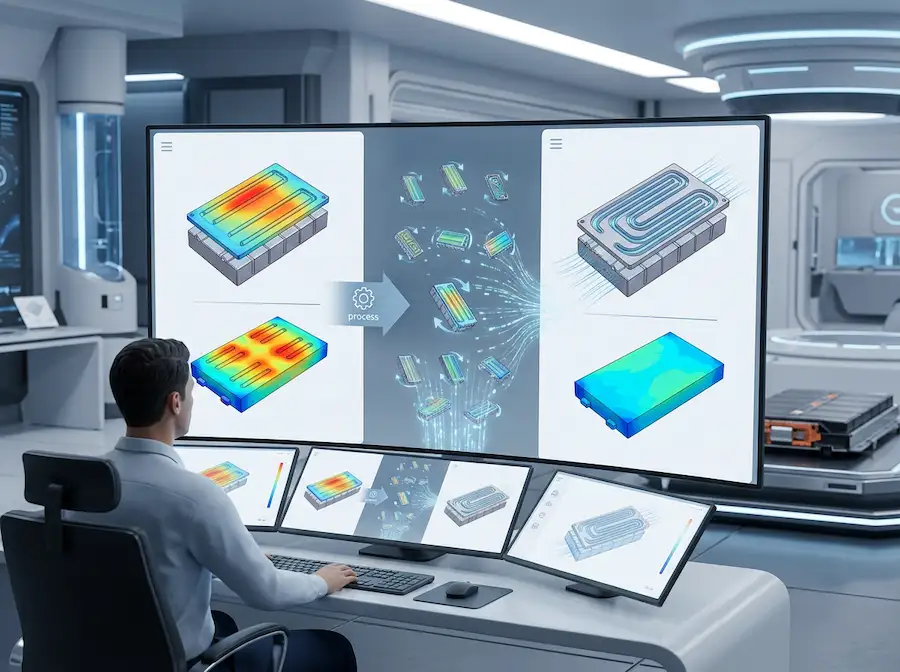
Before any metal is cut, our in-house engineering team starts with initial 3D design and thermal simulation. We rely heavily on Computational Fluid Dynamics (CFD).
During CFD Simulations, we input the maximum heat rejection of the battery modules. We then map out the internal flow paths. The goal is to avoid “dead zones”—areas where the coolant velocity drops to zero, causing the fluid to boil. We iterate the channel width, depth, and routing until the temperature distribution across the entire plate is perfectly uniform, while ensuring the pressure drop remains within the limits of the vehicle’s onboard coolant pump.
If you get the simulation right, physical validation becomes a breeze.
How to produce the Micro-Channel Cold Plate?
Turning a 3D CAD model into a physical, leak-proof part is where many projects fail. Component manufacturing requires strategic precision.
CNC Machining
The process usually begins with CNC machining. We take a solid billet of aluminum and use high-speed 5-axis CNC mills to carve out the intricate micro-channel patterns. CNC machining provides unmatched precision, allowing us to create variable channel widths to balance the flow rate across complex geometries. With our expertise in CNC-machined enclosures and precision liquid cold plates, we ensure tolerances are held to fractions of a millimeter.
Friction Welding
Once the channels are carved into the base plate, we must attach the cover plate to seal the fluid inside. Traditional TIG or MIG welding melts the metal, which can warp the aluminum, distort the micro-channels, and ruin the flatness required for battery cell contact.
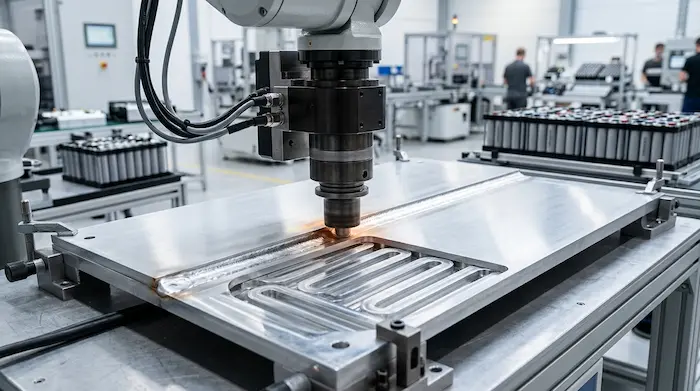
Instead, we use Friction Welding, specifically Friction Stir Welding (FSW).
FSW uses a rapidly rotating tool that plunges into the joint between the two aluminum plates. The friction generates intense heat, plasticizing the metal (softening it without actually melting it). The tool then traverses along the joint, physically stirring the metal from both plates together. The result is a seamless, forged-quality weld that is incredibly strong, perfectly flat, and highly resistant to fatigue.
How to test the Micro-Channel Cold Plate?
A single coolant leak inside a high-voltage battery pack can lead to catastrophic thermal runaway. Therefore, testing is non-negotiable. Manufacturing must be governed by resident QA engineers and 100% End-of-Line testing protocols.
Here are the three critical tests every cold plate must pass:
1. Pressure Testing
First, we conduct Pressure Testing. We seal the cold plate and pump it full of air or fluid up to 3 to 5 times its normal operating pressure (often exceeding 50 to 100 PSI). We hold this pressure for a set duration to ensure the structural integrity of the FSW joints won’t burst under maximum pump loads.
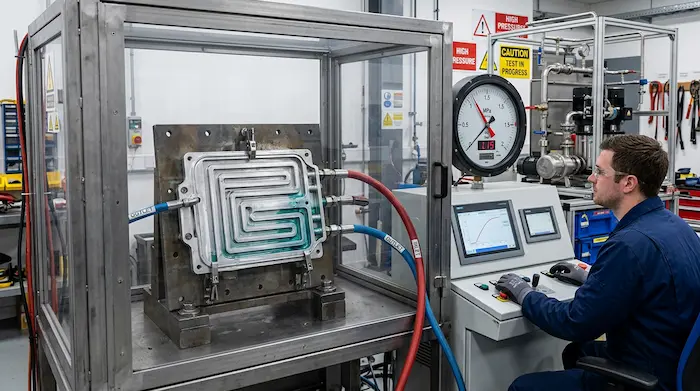
2. Sealing Test
Next is the Sealing Test (or leak test). Even if the plate holds pressure, it might have a microscopic pinhole. We often use underwater air decay testing or Helium mass spectrometry. We inject helium into the cold plate in a vacuum chamber. Because helium molecules are so small, they will escape through the tiniest flaw, instantly triggering our sensors. If a plate passes this, it is fundamentally leak-proof.
3. Thermal Shock Test
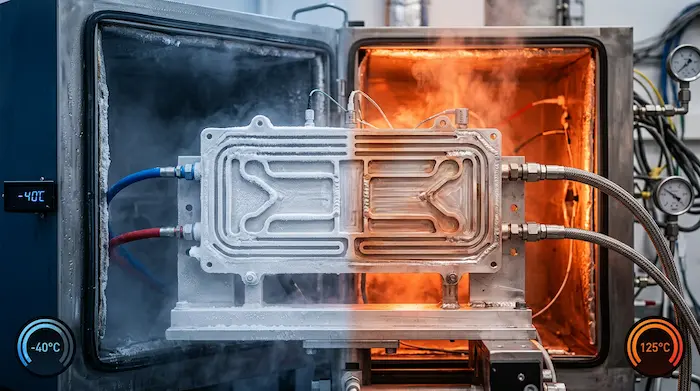
Finally, we subject the parts to a Thermal Shock Test. Vehicles operate in the real world, experiencing freezing winters and scorching summers. We place the cold plate in an environmental chamber and rapidly cycle the temperature from -40°C to +85°C. This forces the aluminum to violently contract and expand. After dozens of cycles, we re-run the sealing test to ensure the welds haven’t fatigued or cracked under thermal stress.
Types of Micro-Channel Cold Plate
There isn’t a one-size-fits-all approach. Depending on your packaging constraints and application, you might encounter different types of liquid cooling solutions:
| Type | Manufacturing Method | Best For |
|---|---|---|
| Machined FSW Cold Plates | CNC milled channels sealed with Friction Stir Welding. | Heavy-duty trucks, marine vessels, and high-performance custom EVs requiring deep engineering. |
| Extruded Micro-Channel Tubes | Aluminum pushed through a die to form long, flat tubes with internal channels (often bent into "snake" shapes). | Cylindrical cell battery packs (weaving between the cells). Highly cost-effective for high volumes. |
| Stamped and Brazed Plates | Two thin sheets of aluminum stamped with dimples and channels, then brazed together in a furnace. | Mass-market passenger EVs prioritizing weight reduction and automated, high-volume production. |
FAQ
Can I just use standard tap water in my micro-channel cold plate?
Absolutely not. Tap water contains minerals (calcium, magnesium) that will quickly cause galvanic corrosion and scale buildup. This will clog the micro-channels and destroy the thermal performance. Always use a proper deionized water and glycol mixture.
What is an acceptable pressure drop?
It entirely depends on your vehicle’s thermal management system architecture. Generally, engineers aim for a pressure drop of less than 30-50 kPa across the battery pack, but high-performance systems might tolerate higher pressure drops if equipped with heavy-duty pumps.
How flat does the top surface of the cold plate need to be?
Extremely flat. We typically aim for a flatness of 0.1mm to 0.2mm per meter. Any bowing or warping creates an air gap between the battery cell and the plate. Air is a terrible thermal conductor, which completely defeats the purpose of liquid cooling. We use thermal interface materials (TIMs) or thermal gap pads to account for microscopic imperfections.
Ready to Solve Your Integration Headache?
If you are a CTO, Chief Engineer, or Program Manager, you know that battery projects often fail at the integration stage—not because components are unavailable, but because mechanical, thermal, electrical, and control systems are not developed as one coordinated solution.
At Astraion Dynamics, our defining strength is our transparent “Bring Your Own Cells/Modules” partnership model. You negotiate directly with top cell manufacturers to secure raw modules at zero middleman markup, while we master the deep engineering and complex supply chain ecosystem.
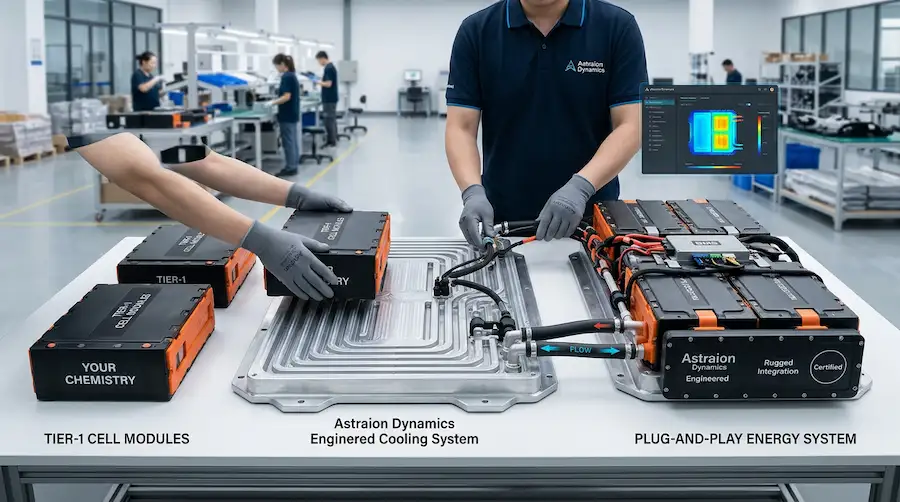
We design rugged IP67+ aluminum enclosures, precision liquid cold plates, intelligent BMS architectures, and high-voltage PDUs. From concept through validation, UN38.3 / ECE R100.3 homologation, and final deployment, we serve as your engineering-driven integration partner.
Don’t let thermal bottlenecks delay your go-to-market. Contact Astraion Dynamics today to discuss your battery system packaging constraints, and let’s engineer a solution built for real-world operation.
