

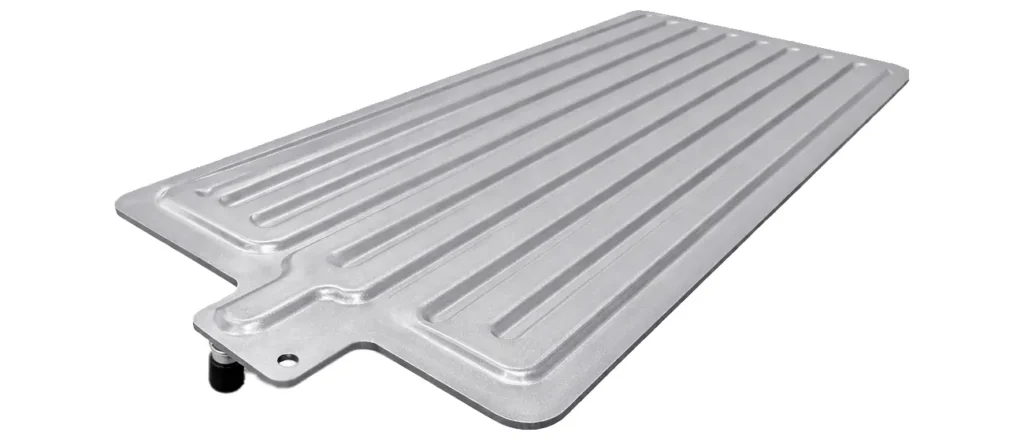
Over 60% of battery project delays stem from poor thermal management planning. I am writing this guide to help you master the liquid cooling plate for a battery pack. If you want to prevent thermal runaway and extend battery life, you need to get this right.
A liquid cooling plate for a battery pack is a metallic thermal management component that absorbs and dissipates heat generated by battery cells. It uses internal flow channels to circulate a liquid coolant, maintaining optimal operating temperatures between 25°C and 40°C to prevent thermal runaway.
Want to know exactly how to choose the right materials, manufacturing processes, and testing methods for your next EV or energy storage project? Keep reading. I will break down everything from CNC machining to friction stir welding.
What is a liquid cold/cooling plate?
A liquid cooling plate is essentially a high-performance heat sink with hollow channels inside.
Instead of relying on ambient air to blow away the heat, these plates use a liquid coolant that flows through internal pathways. The metal surface of the plate makes direct or indirect contact with your heat-generating components.
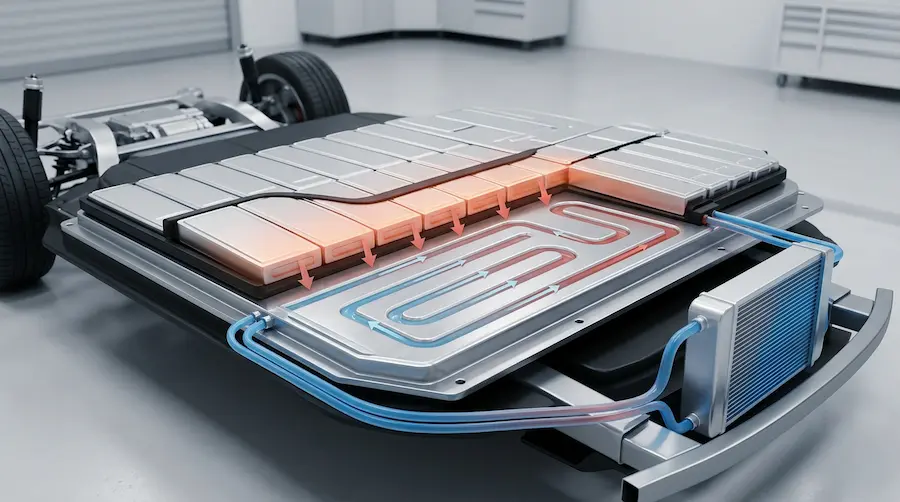
As the components get hot, the heat transfers into the metal plate. The flowing liquid then absorbs that heat and carries it away to a radiator or chiller, where it cools down before looping back through the system.
Think of it like the radiator system in a traditional gas-powered car, but flattened into a sleek, highly engineered metal slab designed to sit snugly against delicate electronics or battery cells.
What do cooling plates do?
Cooling plates have one primary job: heat dissipation.
When you push high electrical currents through a system, you generate a massive amount of thermal energy. If you do not remove that heat quickly, your components will overheat, degrade, or catastrophically fail.
Cooling plates act as a thermal bridge. They provide a highly conductive path for the heat to escape.
By constantly circulating fresh, cool liquid through the system, these plates can maintain a stable, uniform temperature across a large surface area. This is incredibly important for sensitive applications where even a slight temperature variance can cause performance drops.
What is the purpose of the cooling plate for the battery pack?
When we talk specifically about electric vehicles (EVs) or heavy-duty energy storage systems, the cooling plate becomes a critical safety and performance component.
During fast charging or heavy discharging, lithium-ion batteries generate an intense amount of heat 5. The optimal operating temperature for these batteries is a very narrow window between 25°C and 40°C.
If the battery gets too hot, its cycle life plummets. In worst-case scenarios, it can trigger thermal runaway, which leads to fires or explosions .
If the battery gets too cold, it loses efficiency, and your EV might lose 20% to 30% of its driving range.
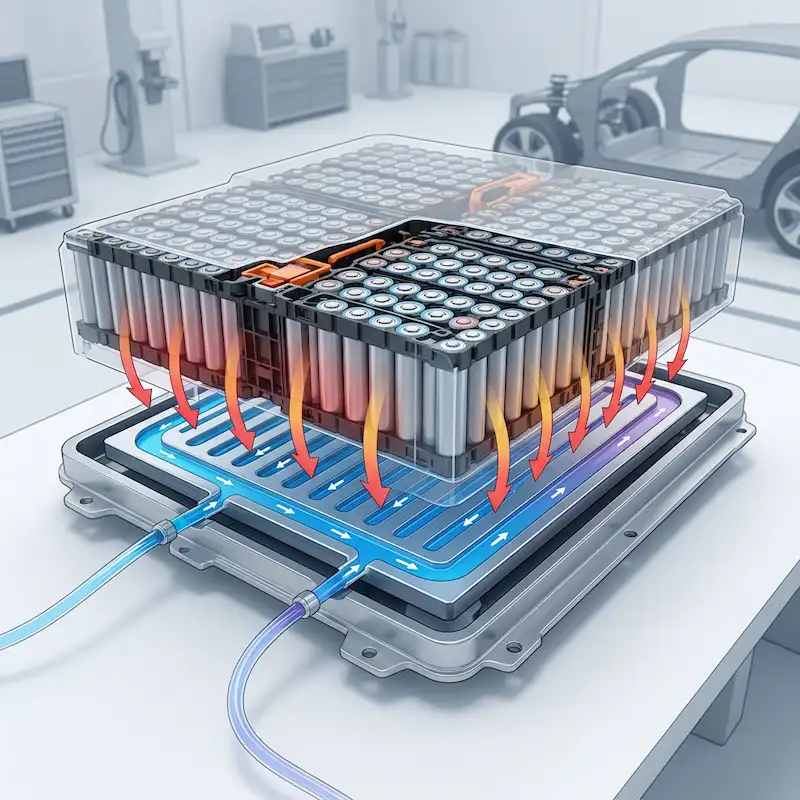
This is where the liquid cooling plate steps in. Liquid cooling can achieve a heat dissipation density of 5 to 10 W/cm², which is roughly 5 to 10 times more effective than traditional air cooling.
For modern high-voltage platforms like 800V fast-charging systems or ultra-high energy density packs, air cooling simply cannot keep up 5. A liquid cooling plate might be the only viable way to keep these advanced battery packs within their safe temperature limits.
How does a liquid cooling plate work?
The physics behind a liquid cooling plate are straightforward, but the engineering is highly complex.
The flat surface of the plate is mounted against the battery cells or modules. Often, a thermal interface material (TIM) like a thermal pad or paste is placed between the battery and the plate to fill any microscopic air gaps and improve heat transfer.
As the battery cells heat up, the thermal energy conducts through the TIM and into the metal body of the cooling plate.
Inside the plate, a pump pushes a liquid coolant (usually a mix of water and glycol) through a meticulously designed maze of channels. As the coolant flows over the internal walls of these channels, it absorbs the heat. The hot coolant then exits the plate, travels to a heat exchanger to cool off, and recirculates back into the plate.
The Importance of Flow Rate
You cannot just pump liquid through a plate as fast as possible and hope for the best.
Flow rate is a delicate balancing act. If the flow rate is too slow, the coolant absorbs too much heat early in the channel and becomes too hot to cool the rest of the battery pack effectively.

If the flow rate is too fast, you create a massive pressure drop (ΔP) inside the system. A high pressure drop means you need a larger, heavier, and more power-hungry pump to push the liquid through. This drains the battery you are trying to protect.
Finding the perfect flow rate requires careful channel design to ensure the coolant moves fast enough to maintain uniform temperatures, but slow enough to keep the pressure drop manageable.
What is a cold plate made of?
Material selection is one of the first decisions you need to make. Your choice will dictate the thermal performance, weight, and manufacturing cost of your cooling plate.
Aluminum Alloys
Aluminum is the undisputed king of battery cooling plates.
It is lightweight, relatively cheap, and offers excellent thermal conductivity ranging from 150 to 250 W/(m·K).
Different manufacturing processes require different aluminum alloys. For example, if you are using an extrusion process or CNC machining, you might opt for 6061 or 6063 aluminum because of its excellent machinability and structural integrity.
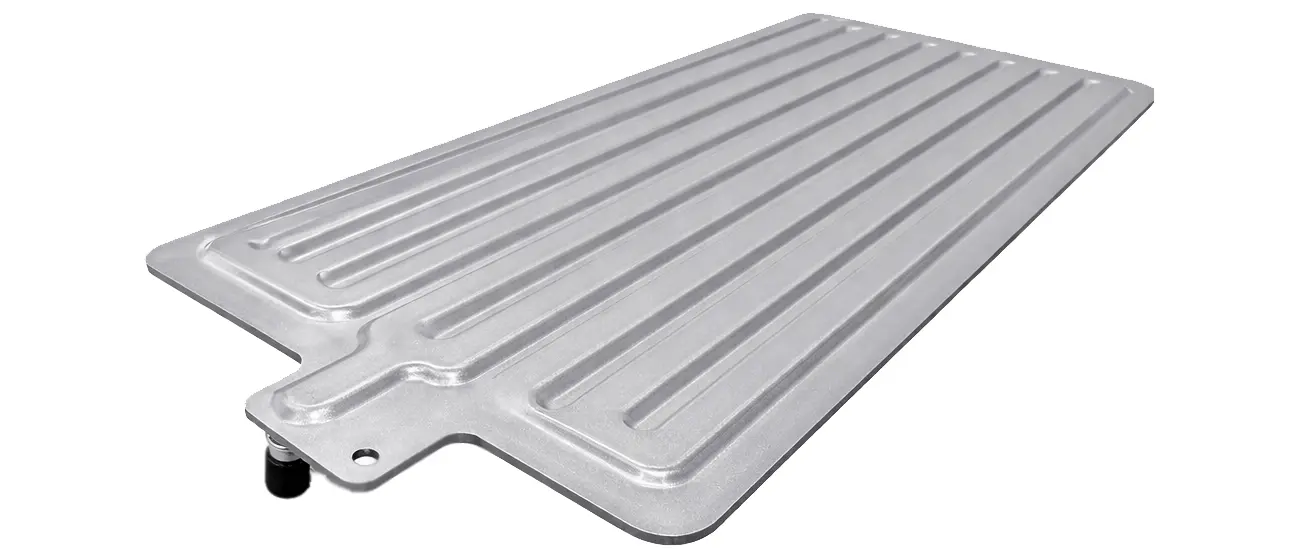
If you are stamping and brazing the plates, or using friction stir welding, 3003 aluminum is often a better choice due to its formability and welding characteristics.
For heavy-duty vehicles or marine vessels, aluminum is almost always the go-to material because it keeps the overall weight of the massive battery pack down while providing rugged, IP67+ compliant enclosures.
Copper
Copper offers vastly superior thermal conductivity compared to aluminum, clocking in at around 398 W/m·K .
If you are dealing with extreme heat flux scenarios, like cooling a high-performance data center GPU, copper might be a great choice .
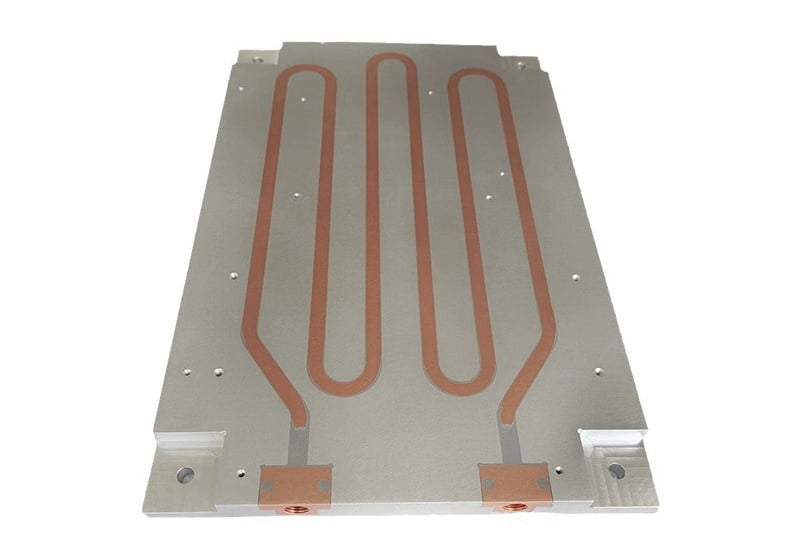
However, for EV battery packs, copper is rarely used for the main cooling plate body. It is incredibly heavy and significantly more expensive than aluminum. Furthermore, machining copper generates a lot of material waste, which drives up production costs.
If you need the performance of copper but the weight of aluminum, you might consider a hybrid design where copper tubes are embedded into an aluminum base plate.
How to design a cold plate for the battery pack?
Designing a cooling plate is not just about drawing a box with some squiggly lines inside. It requires a deep understanding of thermodynamics and fluid mechanics.
Running Thermal Simulations (CFD)
Before you ever cut a piece of metal, you need to run Computational Fluid Dynamics (CFD) simulations.
CFD software allows you to create a digital twin of your cooling plate. You can input your battery’s heat generation data, set your coolant flow rate, and visualize exactly how the heat will move through the system.
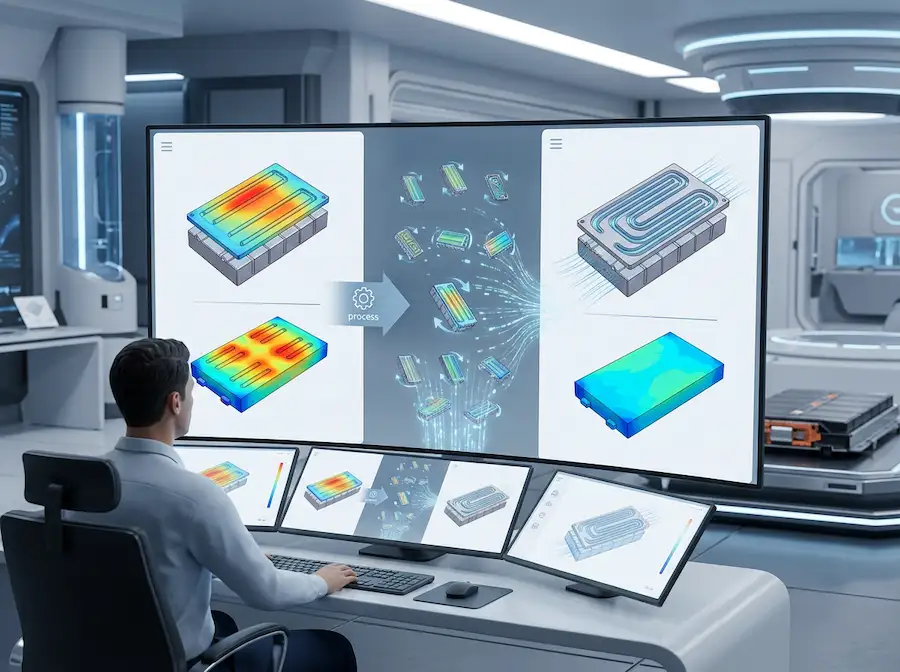
Your goal in CFD is usually to keep the maximum temperature difference (ΔT) between any two battery cells under 3°C to 5°C. If one side of your battery pack is 5°C hotter than the other, the cells will degrade at different rates, which ruins the lifespan of the entire pack.
Single-Loop vs. Double-Loop Channels
When designing the internal flow channels, you generally have two options: single-loop or double-loop .
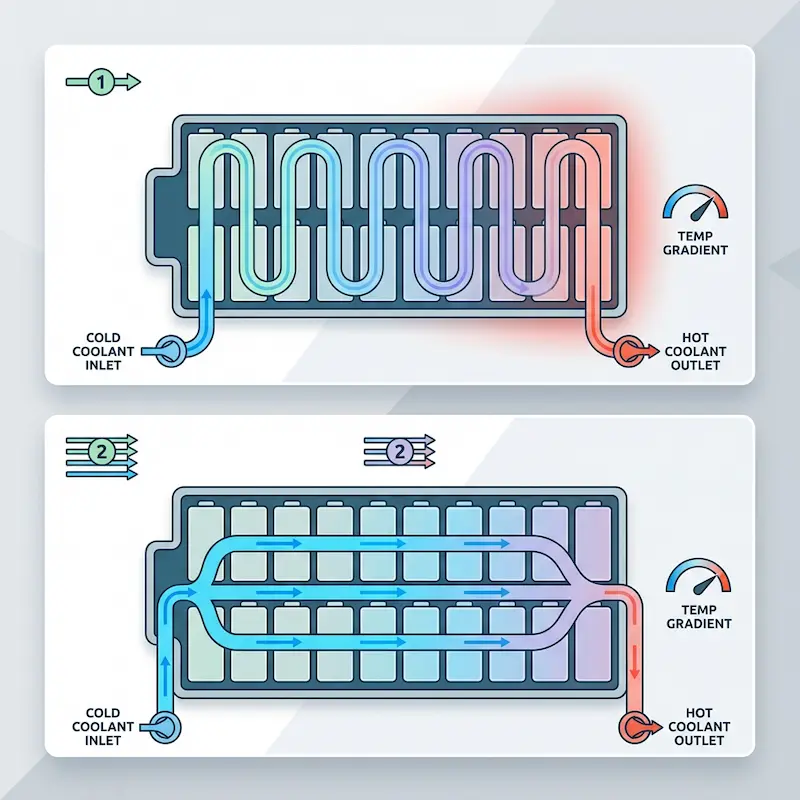
A single-loop design features one continuous path from the inlet to the outlet. It is simpler to manufacture but can lead to larger temperature gradients because the coolant gets progressively hotter as it travels down the line.
A double-loop design splits the flow into multiple parallel paths. This allows fresh, cold coolant to reach different parts of the battery pack simultaneously. If your layout space allows for it, a double-loop design is almost always preferred because it drastically reduces temperature differences across the pack.
How to produce the cold plate?
Many engineering teams make the mistake of designing a theoretically perfect cooling plate that is completely impossible (or insanely expensive) to manufacture.
Your manufacturing process should evolve as your project moves from concept to mass production.
The Prototyping Phase (CNC Machining)
When you are building your first 1 to 50 prototype units, time is your most valuable resource.
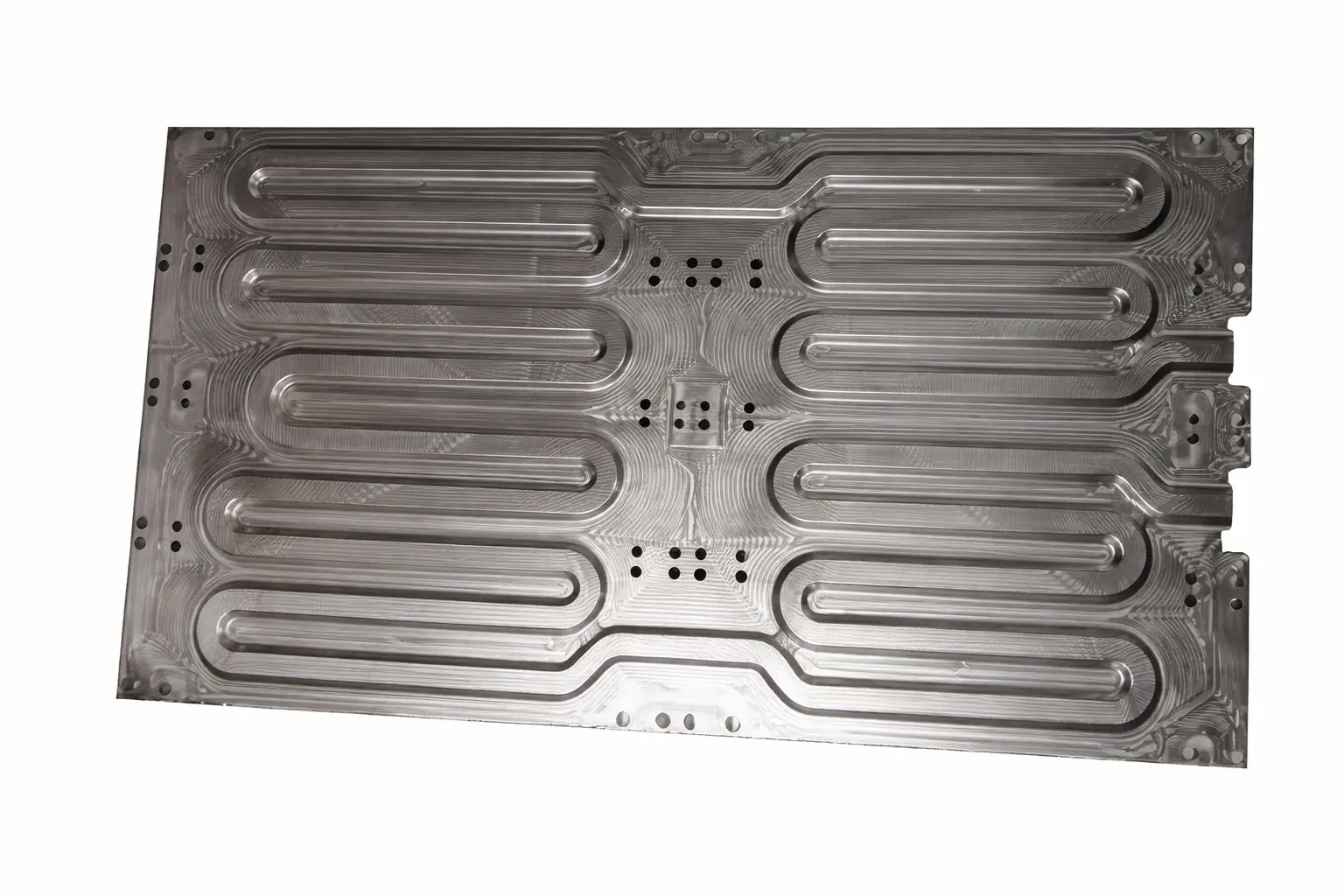
During this phase, you should rely on CNC machining. A CNC machine can mill complex channels directly into a solid block of aluminum.
There are no expensive molds or tooling required, meaning you can get your prototypes in 10 to 15 days. If your CFD simulation was slightly off and you need to adjust the channel width, you simply update the CAD file and machine a new plate.
The per-unit cost is high, but the flexibility is unmatched.
The Mass Production Phase
Once your design is frozen and you are ready to produce hundreds of thousands of units, CNC machining becomes far too slow and expensive.
At this stage, you need to transition to a tooling-based process like stamping and vacuum brazing, or roll bonding.
These processes require a massive upfront investment to create the metal stamping dies. However, once the dies are made, the machine can punch out thousands of plates a day. This causes your per-unit cost to plummet by 40% to 60%.
The Hybrid Approach
Sometimes, you need to combine processes to solve complex engineering challenges.
For large Energy Storage System (ESS) projects, a pure CNC plate is too expensive, and a pure extruded plate cannot handle complex manifold connections.
In these cases, you might use an extruded aluminum profile for the long, straight main body to keep costs down, and then use CNC machining to carve out precise sealing grooves at the ends. Finally, you can seal the whole assembly using friction stir welding.
This hybrid approach gives you the best of both worlds: low cost and high precision.
Types of cold plates for the battery pack
There is no single “best” cold plate structure. The right choice depends entirely on your production volume, budget, and thermal requirements. Here are the main types you will encounter.
Stamped and Brazed Cold Plates
These are made by stamping channel shapes into thin aluminum sheets, stacking a flat cover plate on top, and sealing them together in a vacuum brazing furnace.
They are thin, lightweight, and incredibly cost-effective at high volumes. This makes them the go-to choice for mass-market passenger EVs.
Machined Cold Plates
As mentioned earlier, these are carved from a solid block of metal using a CNC mill.
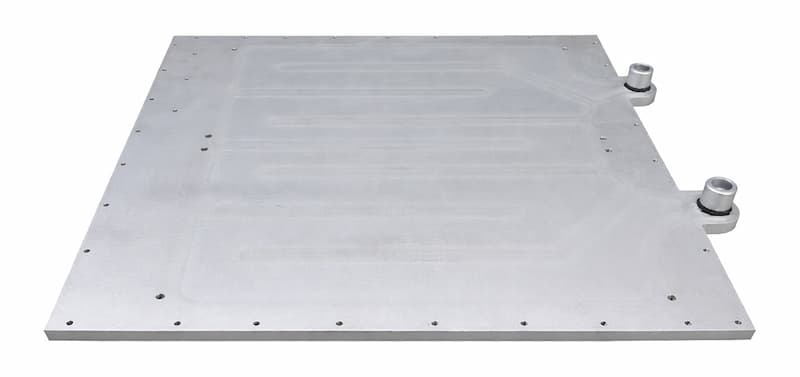
They offer the absolute best design freedom and thermal performance because you can create incredibly complex micro-channels. However, the high cost and material waste make them better suited for prototypes or low-volume, high-performance applications.
Extruded Flat-Tube Cold Plates
This process involves pushing hot aluminum through a die to create long, hollow profiles with internal channels.
Extrusion is fantastic for creating long, linear cooling bars with very little material waste. If you are building a large, rectangular battery pack for an electric bus or a telecom rack, extruded plates could be a highly economical option.
Embedded Tube Cold Plates
This is the simplest and cheapest method. You take a flat aluminum plate, machine some grooves into it, and press a bent copper or aluminum tube into the grooves.
You do not need any fancy welding equipment. However, the thermal resistance is higher because the heat has to travel through the base plate, into the tube wall, and then into the liquid. This might be a good choice for low-power industrial equipment, but it is rarely used in high-performance EVs.
Comb-Fin Cold Plates
These plates feature incredibly dense arrays of thin metal fins, created by skiving or stamping the base metal.
This creates a massive surface area for the coolant to touch, resulting in extreme heat transfer capabilities. They are complex and sensitive to damage, making them better suited for cooling localized hot spots like data center GPUs rather than large battery packs.
Die-Cast and FSW Cold Plates
High-pressure die casting is used to form complex internal passages in a single operation. Any open cavities are then sealed shut using friction stir welding (FSW).
This creates a structurally integrated, incredibly strong part. If you are building a heavy-duty mining vehicle or an electric marine vessel where the battery enclosure needs to withstand massive mechanical loads, this is the structure you want.
Friction Welding (FSW) vs. Brazing
When it comes to sealing the two halves of a liquid cooling plate together, you generally have two main options: Brazing or Friction Stir Welding (FSW).
Vacuum Brazing
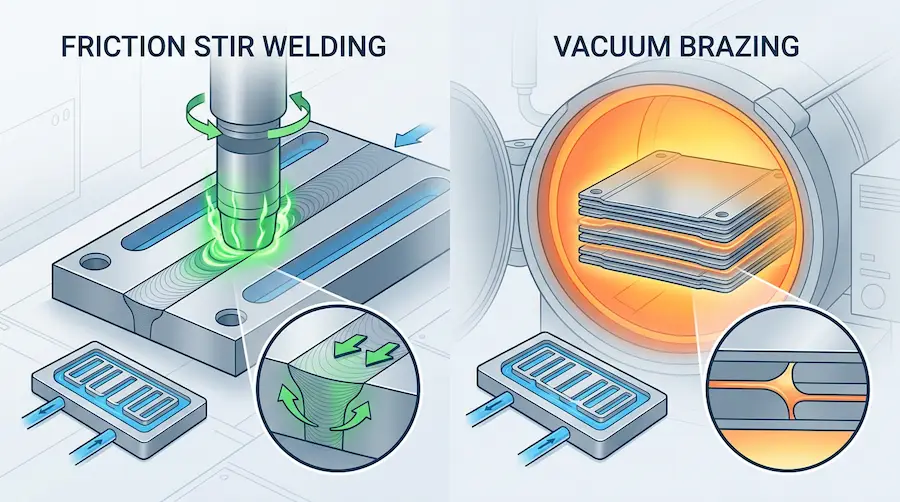
Brazing involves placing a thin layer of filler metal between the two halves of the cooling plate. The entire assembly is placed into a massive vacuum furnace and heated until the filler metal melts and bonds the pieces together.
Brazing is fantastic because it allows you to weld incredibly complex, thin-walled structures . It is the standard process for stamped cooling plates.
However, the equipment is wildly expensive (vacuum furnaces can cost over €1M), and the heating cycles can take up to 8 hours. Additionally, heating the aluminum to near-melting temperatures can weaken the metal, requiring post-braze heat treatments to restore its strength.
Friction Stir Welding (FSW)
Friction Stir Welding is a completely different beast. It is a solid-state joining process, meaning the metal never actually melts.
A rapidly spinning cylindrical tool plunges into the seam between the two metal plates. The friction generates intense heat, softening the metal into a plastic-like state. As the tool moves along the seam, it literally stirs the two pieces of metal together, forging a dense, solid joint.
Because there is no melting, FSW eliminates the risk of porosity, hot cracking, or leaks. The resulting weld is incredibly strong and reliable.
The downside? FSW equipment is expensive, and it requires the base metal to be thick enough to withstand the mechanical force of the spinning tool. It is not suitable for paper-thin stamped plates, but it is perfect for rugged, heavy-duty battery enclosures.
How to test the cold plate?
You cannot just weld a cold plate together and assume it works. A single leak inside a high-voltage battery pack can cause a catastrophic short circuit. Rigorous testing is non-negotiable.
Cleaning and Preparation
Before you test anything, the internal channels must be flawlessly clean.
During CNC machining or cutting, metal shavings and cutting oils can easily get trapped inside the blind spots of the flow channels. If these particles break loose during operation, they can block the flow or damage the pump.
Manufacturers use high-pressure water guns to thoroughly flush the internal channels, followed by strict drying processes to ensure zero moisture remains.
Pressure Testing
Your cooling plate needs to withstand significant internal pressure.
During a destruction pressure test, engineers will continuously pump fluid into the plate until it physically bursts. To pass the test, a standard EV cooling plate must typically withstand a maximum pressure of at least 1 MPa (about 145 psi) without failing.
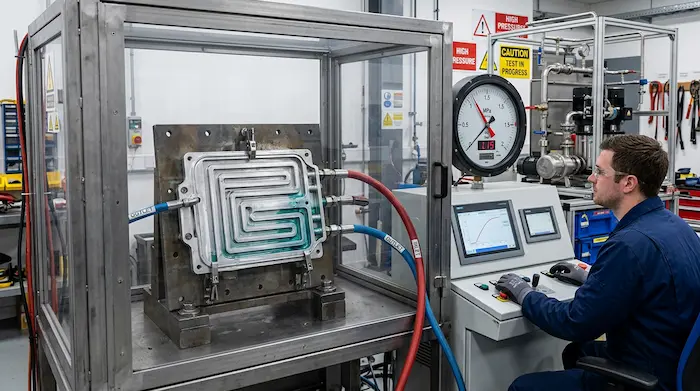
In production, every single plate should undergo a routine pressure test (often at around 25 bar) to ensure structural integrity.
Sealing and Airtightness Test
Even if the plate does not burst, it might still have microscopic leaks.
The gold standard for leak detection is the Helium leak test. Helium atoms are incredibly small, so if there is a microscopic flaw in the weld, the helium will find it. High-end manufacturers require a helium leak rate of less than 10^-6 or even 10^-8 Pa·m^3/s 24.
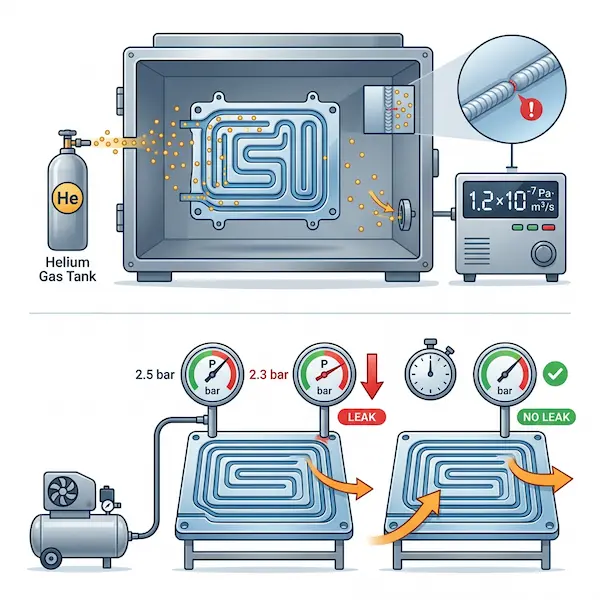
For faster, large-scale production testing, the pressure drop method is widely used 5. The plate is inflated with air, sealed, and monitored. If the internal pressure drops over a set period, you know you have a leak.
Thermal Shock Test
Battery packs operate in brutal environments. They might be parked outside in a freezing -40°C winter overnight, and then subjected to intense heat during a fast-charging session the next day.
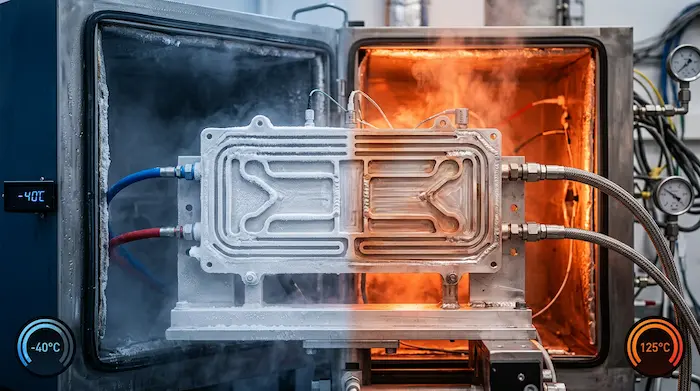
To ensure the welds do not crack under thermal expansion and contraction, cooling plates are subjected to thermal shock testing, rapidly cycling them between extreme temperatures like -40°C and 125°C. If the plate maintains its airtightness after this abuse, it is ready for the road.
Which cold plate type is best for the EV battery packs?
The “best” cold plate depends entirely on the physical format of your battery cells.
If you are using Prismatic cells, you will typically use a large, flat module-level cooling plate placed at the bottom of the battery pack. Stamped and brazed plates or FSW extruded plates are perfect for this application.
If you are using Cylindrical cells (like the ones popularized by Tesla), flat plates do not work well because the contact area is too small. Instead, you will likely use serpentine tubes that weave in and out between the individual cylindrical cells, ensuring every single cell touches the cooling pipe.
If you are using Pouch cells, you might integrate smaller, stamped water cooling plates directly inside the module, sandwiched between the delicate pouches .
If you are an OEM or system integrator working on heavy-duty trucks, marine vessels, or off-highway equipment, you might want to partner with an engineering-driven integration hub. Companies like Astraion Dynamics allow you to bring your own raw battery modules, and they will handle the complex engineering of the rugged IP67+ enclosures, custom liquid cold plates, and high-voltage integration. This bridges the massive gap between buying raw cell chemistry and deploying a fully certified, real-world vehicle .
FAQ
Can I use water as a coolant?
Pure water has excellent thermal properties, but it freezes at 0°C and causes corrosion. You should use a mixture of water and ethylene glycol (or propylene glycol) to lower the freezing point and add anti-corrosive properties.
How thick should a cooling plate be?
It depends on the manufacturing process and structural requirements. Stamped plates can have incredibly thin flow channels (≤3mm) , making them very lightweight. Machined or FSW plates will be thicker to maintain structural rigidity.
Do I need a custom cooling plate?
If you are building a low-power, standardized industrial machine, you might get away with an off-the-shelf embedded tube plate. However, if you are developing a high-density EV battery pack, you almost certainly need a custom-designed plate optimized for your specific cell layout, heat flux, and packaging constraints.
Choosing the right liquid cooling plate dictates your battery’s safety, lifespan, and overall performance. I hope this comprehensive guide helps you navigate material selection, manufacturing processes, and rigorous testing protocols for your next big project. What specific thermal management challenges are you currently facing in your battery pack design today?
