

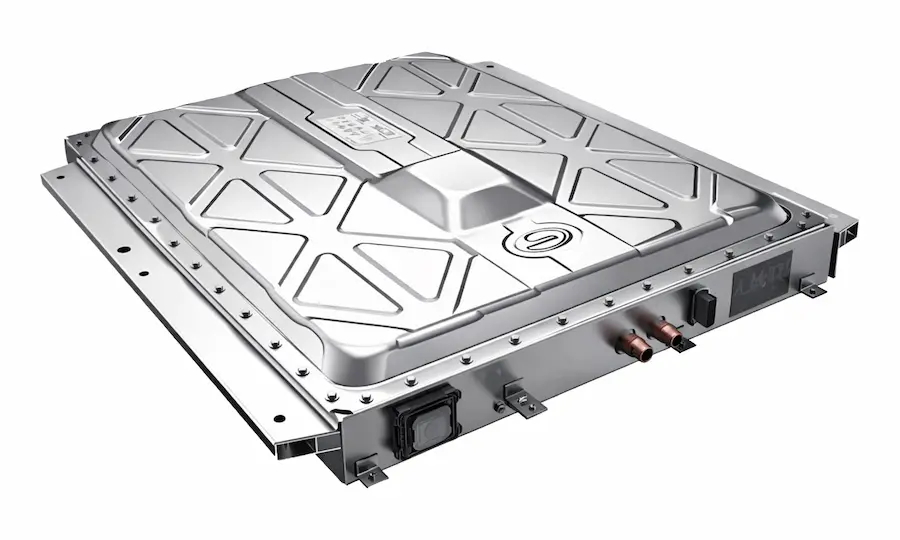
Designing battery pack enclosures is tough. You need IP67+ protection, thermal management, and extreme crash safety without adding massive weight. Did you know the enclosure accounts for up to 20% of the total battery pack weight? I’ve compiled the ultimate guide to the top materials used today.
The top metals for battery pack enclosures include stamped aluminum (5052, 5083), extruded aluminum (6005A-T6, 6061-T6, 6063-T5), die-cast aluminum (ADC12, AlSi10MnMg, A356), and stainless steel (304, 316L). These balance lightweighting, thermal conductivity, and extreme crash safety.
Want to know which alloy is best for your specific heavy-duty or marine application? Let’s dive into the exact specs, pros, and cons of each metal.
The Definitive List of Battery Enclosure Metals
As an engineering-first integrator, we transform your procured raw modules into a rugged, fully certified, plug-and-play energy system, leveraging China’s vast specialized supply chain.
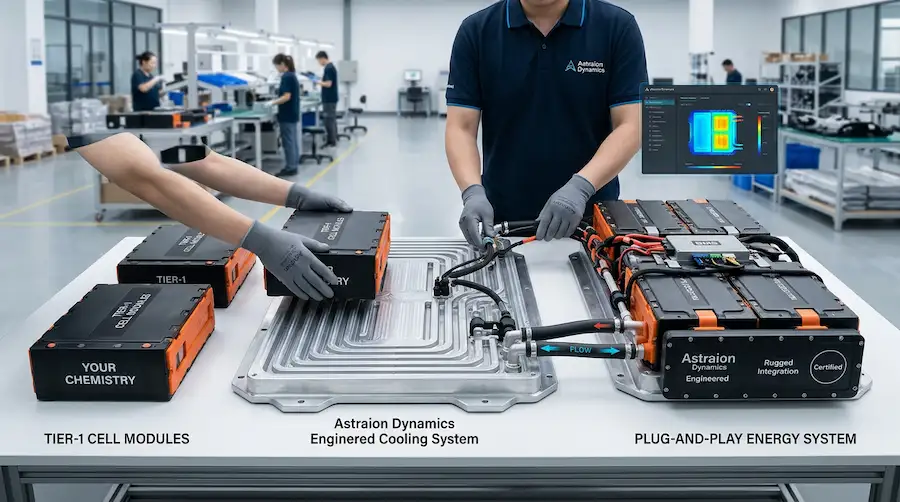
But before we can do that, we need to talk about chemistry—not just inside the cell, but outside of it.
Choosing the right metal for your battery box dictates its thermal performance, EMC (Electromagnetic Compatibility) shielding, and crashworthiness.
Here are the top 10 materials you need to know.
#1 Aluminum 5052: The Stamping Workhorse
When you look at the top cover of most EV battery packs, you are likely looking at Aluminum 5052.
Why? Because it is incredibly easy to form.
This non-heat-treatable alloy offers excellent fatigue strength and is highly resistant to corrosion. It has a yield strength of around 193 MPa (in its H32 temper), which isn’t the highest on this list, but it doesn’t need to be.
The top cover of an enclosure rarely bears the primary structural load of the vehicle. Instead, its main job is sealing.
Our in-house engineering team designs rugged IP67+ aluminum enclosures, and 5052 is often our go-to for stamped upper lids because it bends beautifully without cracking 1. This ensures the silicone or EPDM gaskets seat perfectly, keeping water and dust out.
#2 Aluminum 5083: The Marine-Grade Shield
If you are building an electric ferry or an offshore energy platform, Aluminum 5083 is your best friend.
This alloy contains a higher percentage of magnesium, which gives it exceptional resistance to seawater and industrial chemical environments.
Electric boats and ferries have stringent requirements for waterproofing, liquid cooling, and system integration. Standard automotive metals will pit and corrode when exposed to salt spray for extended periods.
Aluminum 5083 retains exceptional strength even after welding, making it perfect for the heavy, watertight structural tubs required in marine battery systems.
If you are one of the marine vessel builders and integrators we work with, this is the material we will likely spec for your lower tray.
#3 Aluminum 6005A-T6: The Extrusion Sweet Spot
Now we are getting into the structural bones of the battery pack.
Aluminum 6005A-T6 is a medium-strength, heat-treatable alloy that is highly extrudable.
Most modern battery enclosures use an extruded aluminum frame for the side walls. These extrusions feature complex internal hollow profiles designed to absorb kinetic energy during a side-impact collision.
6005A-T6 hits the absolute sweet spot between extrusion speed, cost, and crashworthiness. It bends and crushes predictably, absorbing the impact energy before it can penetrate the battery modules.
Heavy trucks have high demands for battery pack durability, liquid cooling, and high-voltage integration. Using 6005A-T6 for the main side-impact rails ensures your heavy-duty vehicle meets global homologation standards.
#4 Aluminum 6061-T6: The Aerospace Standard
When you need uncompromising strength, you turn to Aluminum 6061-T6.
With a yield strength of roughly 276 MPa, this is the aerospace standard. It is significantly stronger than 6005A and is widely used for load-bearing cross-members inside the battery pack.

These cross-members support the massive weight of the battery modules and prevent the enclosure from twisting during vehicle operation.
With expertise in CNC-machined enclosures, liquid cooling, intelligent BMS, high-voltage integration, VCU communication, and global homologation, we help bring reliable and compliant energy solutions to market faster.
Because 6061-T6 machines are so clean, we frequently use it for CNC-machined mounting brackets, high-voltage connector housings, and precision structural nodes.
#5 Aluminum 6063-T5: The Thermal Master
Heat is the enemy of lithium-ion batteries.
If you don’t manage thermal runaway, your project will fail. That is exactly where we step in.
Aluminum 6063-T5 is the undisputed king of thermal management in the extrusion world. It has a thermal conductivity of around 200 W/m·K, which is fantastic for transferring heat.
We use this alloy extensively when designing precision liquid cold plates.
By extruding 6063-T5 into flat, multi-channel tubes, we can flow water-glycol coolant directly underneath the battery cells. This keeps the modules within their optimal temperature window, extending cycle life and enabling ultra-fast charging.
#6 ADC12/A380 – Die-casting Aluminum: The High-Volume Hero
If you are scaling up for mass production, machining every part from a solid billet will bankrupt your project.
Enter ADC12 (the Japanese standard) or A380 (the US equivalent).
This is the most common die-casting aluminum alloy on the planet. It flows like water into complex mold cavities, allowing engineers to consolidate dozens of individual parts into a single casting.

We often see this material used for high-voltage PDUs (Power Distribution Units) and intelligent BMS architectures.
It offers excellent EMI/RFI shielding to protect sensitive electronics from the massive electromagnetic noise generated by the vehicle’s inverter.
#7 AlSi10MnMg – Die-casting Aluminum: The Lightweight Contender
Standard die-castings like ADC12 are strong, but they are brittle. If they take a hard hit, they crack.
In a battery pack, cracking is catastrophic.
AlSi10MnMg is a specialized, high-vacuum die-casting alloy designed specifically for automotive structural parts.
It has incredible ductility (elongation). When a vehicle crashes, an enclosure made of AlSi10MnMg will bend and deform rather than shattering.
This makes it the premium choice for corner nodes and shock tower mounts on the battery pack frame. It allows designers to achieve complex, lightweight geometries without sacrificing crash safety.
#8 A356 – Die-casting Aluminum: The Structural Heavyweight
Sometimes, you just need sheer, rugged durability.
Mining vehicles demand highly reliable, explosion-proof, and heavy-duty battery systems.
For these extreme applications, A356 (often T6 heat-treated) is the material of choice. It offers higher strength and better fatigue resistance than standard die-cast alloys.
We see A356 used for the massive, thick-walled bottom trays of off-highway equipment. It can take a beating from rocks, debris, and brutal vibrations without compromising the IP67 seal.
Our role can range from focused subsystem support to full turnkey battery system delivery, depending on the project scope. If your application is off-highway, we will likely guide you toward A356.

#9 304 Stainless Steel: The Bulletproof Baseline
Aluminum is great for lightweighting, but it has a massive weakness: fire.
Aluminum melts at around 660°C. In the event of a thermal runaway, battery cells can vent gases that exceed 1,000°C, melting right through an aluminum enclosure in seconds.
304 Stainless Steel melts at over 1,400°C.
For many heavy-duty vehicle manufacturers and specialty vehicle developers 2, 304 stainless steel is used as a bottom ballistic shield or even for the entire enclosure body.
It provides unmatched puncture resistance against road debris and contains internal battery fires far better than aluminum. The trade-off? It is significantly heavier.
#10 316L Stainless Steel: The Ultimate Corrosion Fighter
Take everything great about 304 Stainless Steel, and add Molybdenum.
That is 316L.
The “L” stands for low carbon, which makes it incredibly easy to weld without losing its corrosion resistance.
If you are building battery systems for offshore marine environments or underground mining where acidic water is present, 316L is the ultimate insurance policy.
It completely resists pitting and crevice corrosion.
Tier-1 cell manufacturers are built for massive standard volume, often rejecting deep customization for off-highway, marine, or specialized commercial fleets. They sell you the raw modules, but they leave you with a massive engineering headache.

If your headache involves extreme corrosive environments, 316L is the cure.
Stop Wrestling With Integration
Here is the truth.
You can pick the perfect metal, run the perfect thermal simulation, and design a beautiful enclosure. But if you can’t integrate the cells, the BMS, and the liquid cooling into a cohesive system, your project will stall.
Battery projects often fail at the integration stage — not because components are unavailable, but because mechanical, thermal, electrical, and control systems are not developed as one coordinated solution.
We built Astraion Dynamics to close that gap.
Our defining strength is our transparent “Bring Your Own Cells/Modules” partnership model. You negotiate directly with top cell manufacturers to secure raw modules at zero middleman markup, while we master the deep engineering and complex supply chain ecosystem.
You Control the Chemistry, We Master the Engineering.
We combine enclosure engineering, thermal management, HV architecture, intelligent controls, and commissioning support in one coordinated workflow. Manufacturing is executed by our strategic network of over 20 IATF-16949 certified partners, governed by resident QA engineers and 100% End-of-Line testing protocols.
From initial 3D design and thermal simulation to flawless UN38.3 / ECE R100.3 homologation and global logistics, we bridge the gap between raw cell chemistry and your customized vehicle.
Conclusion
Choosing the right metal is just the first step. By matching these materials to your specific application, you ensure safety, reduce weight, and streamline homologation. Ready to build your next-gen battery system? Let’s make it happen.
Ready to get your battery project off the ground?
If you are a Chief Engineer, or Purchasing Manager looking to reduce integration risk and shorten development cycles, let’s talk.
👉 [Click here to Request a Custom Enclosure Engineering Consultation and Quote today.] Bring your modules, and we’ll engineer the ultimate fortress to protect them.
