

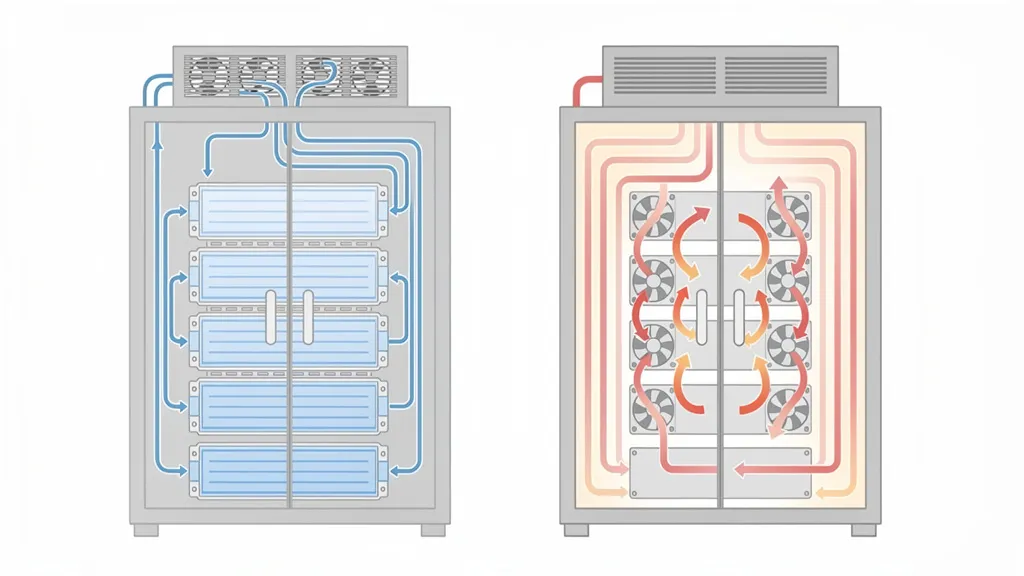
Energy storage systems (ESS) are pushing higher power capacities than ever before. But with massive power comes serious thermal challenges. If you are designing an energy storage cabinet, you are likely facing a critical engineering debate: liquid cooling plate vs air cooling. Which one actually protects your system?
Liquid cooling plates are generally better for high-density energy storage cabinets. They offer up to 3,000 times higher heat transfer efficiency than air, maintain tighter temperature uniformity, and save critical space. Air cooling may suit smaller, low-power applications due to its lower cost and simpler architecture.
I’ve seen too many battery projects fail at the integration stage because the thermal systems weren’t developed properly. Let’s break down both technologies so you can make the right engineering choice for your next ESS project.
What is a liquid cooling plate for the Energy Storage Cabinet?
A liquid cooling plate (often called a cold plate) is a highly efficient heat exchanger designed to absorb and dissipate heat generated by a lithium-ion battery pack.
Instead of blowing chilled air across the battery cells, a liquid cooling system pumps a liquid coolant—usually a water-glycol mixture—directly through micro-channels inside a solid metal plate. You typically mount this precision liquid cold plate directly underneath or between the battery modules inside the battery pack enclosure.
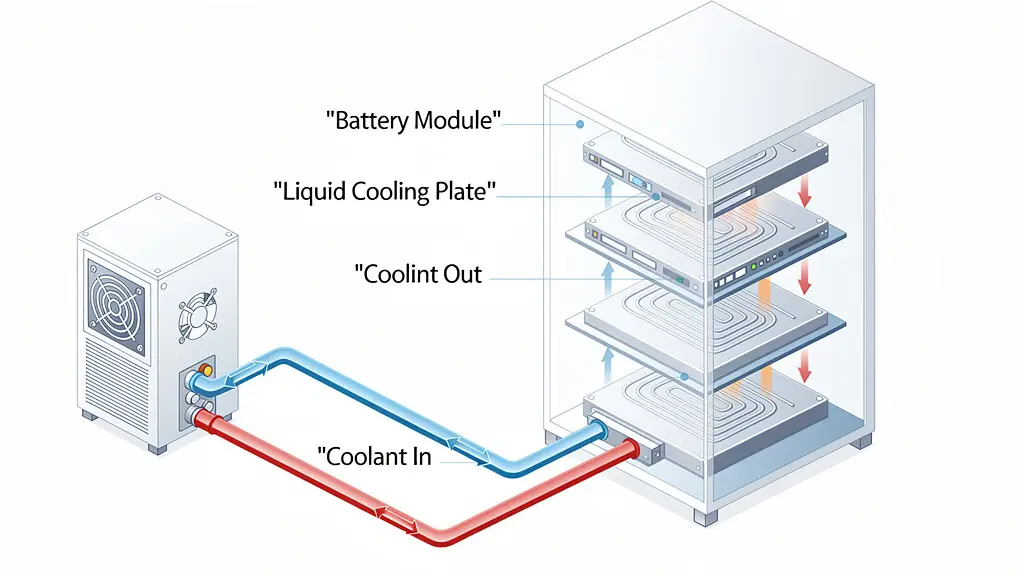
Because liquid has a significantly higher specific heat capacity and thermal conductivity than air, the cold plate acts like a thermal sponge. It rapidly absorbs the heat generated during high C-rate charging and discharging, carrying it away to an external chiller.
What are the purposes of the cold plate for the Energy Storage Cabinet?
The cold plate serves a few critical engineering purposes in an ESS environment:
1. Preventing Thermal Runaway
Lithium-ion batteries are highly sensitive to extreme temperatures. If a single cell overheats, it can trigger a catastrophic chain reaction known as thermal runaway. The primary purpose of the cold plate is to extract heat fast enough to keep the cells well within their safe operating limits.
2. Ensuring Temperature Uniformity
Battery cells degrade at different rates if they operate at different temperatures. A well-designed cold plate ensures a temperature difference (ΔT) of less than 3°C to 5°C across the entire lithium-ion battery pack. This uniformity prevents localized hot spots, ensuring the whole pack ages evenly.
3. Enabling High Power Capacity
Modern ESS projects require large-scale battery packs capable of continuous high-power output 1. High power capacity generates massive internal resistance heat. The cold plate removes this heat efficiently, allowing the system to operate at peak loads without thermal throttling.
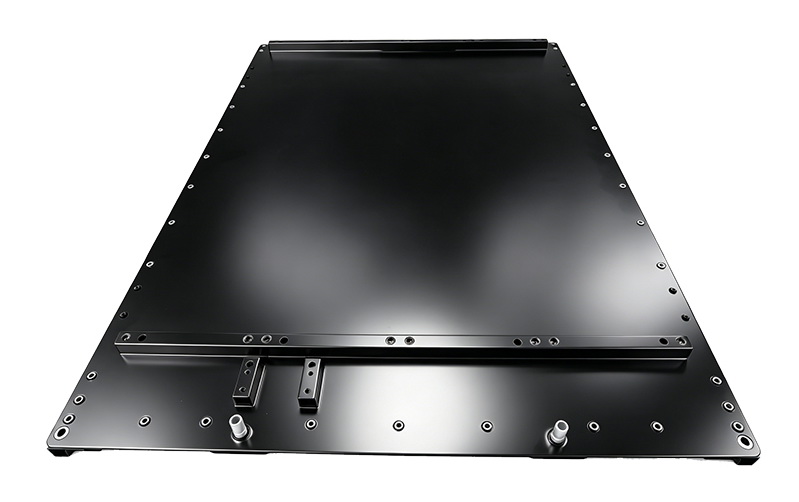
What does the liquid cooling plate consist of for the Energy Storage Cabinet?
When we engineer a liquid cooling system, we don’t just look at the plate itself. We look at the entire coordinated thermal architecture. A typical cold plate setup consists of:
The Aluminum Base Plate: This is the physical structure, often manufactured via extrusion, stamping, or CNC machining. We often design rugged IP67+ aluminum enclosures integrated with these precision plates.
Internal Flow Channels: These are the carefully calculated micro-channels where the coolant flows. The geometry of these channels dictates the fluid pressure drop and thermal transfer rate.
Thermal Interface Material (TIM): A thermally conductive gap filler pad or paste sits between the battery modules and the cold plate. This eliminates microscopic air gaps, drastically improving heat transfer.
Inlet and Outlet Manifolds: These connectors distribute the incoming cold fluid evenly across the cold plate and collect the heated fluid to send back to the chiller.
The Coolant: A 50/50 mix of ethylene glycol and water (EGW) is standard. It prevents freezing in cold environments while offering excellent heat capacity.
What are the benefits of the liquid cooling plates?
I strongly recommend liquid cooling plates for high-demand applications, and here is why:
Exceptional Heat Dissipation: Water transfers heat approximately 3,000 times more effectively than forced air. This makes liquid cooling the undisputed champion for high power capacity systems.
Space Efficiency: Air ducts require massive amounts of physical space inside the energy storage cabinet. Cold plates have a very low profile. This allows you to pack more battery cells into the same physical footprint, maximizing your system’s energy density.
Environmental Protection: Because cold plates do not rely on outside air circulation, you can completely seal your battery pack enclosure. This allows for rugged IP67+ ratings, protecting your expensive lithium-ion battery pack from dust, moisture, and salt fog.
Lower Parasitic Power Draw: Pumping a liquid through a sealed loop typically requires less continuous energy than running multiple high-RPM HVAC fans, improving your overall system efficiency.
What is air cooling for the Energy Storage Cabinet?
Air cooling is the traditional method of thermal management. Instead of using direct-contact metal plates and liquids, this system uses forced convection to regulate the temperature of the energy storage cabinet.
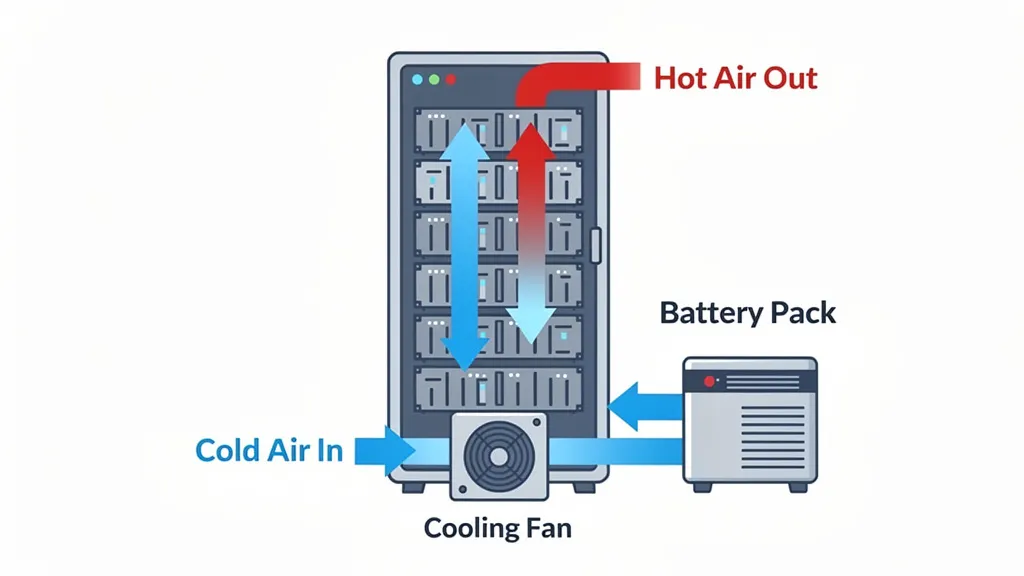
It works exactly like the air conditioning in your home or car. The system generates chilled air and relies on heavy-duty fans to blow that cold air through the battery pack enclosure to strip heat away from the lithium-ion battery pack.
How does the air cooling work for the Energy Storage Cabinet?
The mechanics of air cooling are relatively straightforward.
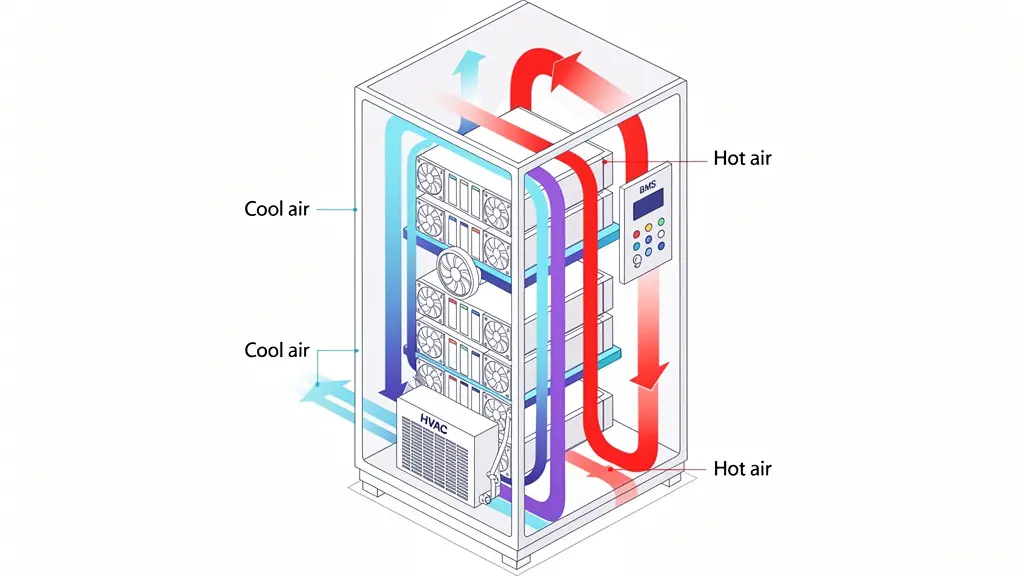
The thermal management system monitors the temperature of the ESS using an intelligent BMS. When the temperature crosses a predefined threshold, the system triggers the HVAC unit and the internal fans.
The HVAC unit cools the incoming air, and the fans push (or pull) this cold air through strategically placed air baffles and channels between the battery modules. As the cold air washes over the cylindrical or prismatic cells, it absorbs the heat. The system then exhausts the hot air out of the cabinet or recirculates it back through the HVAC evaporator core to be cooled again.
What does the air cooling consist of for the Energy Storage Cabinet?
An air-cooled system relies on several bulky mechanical components to get the job done:
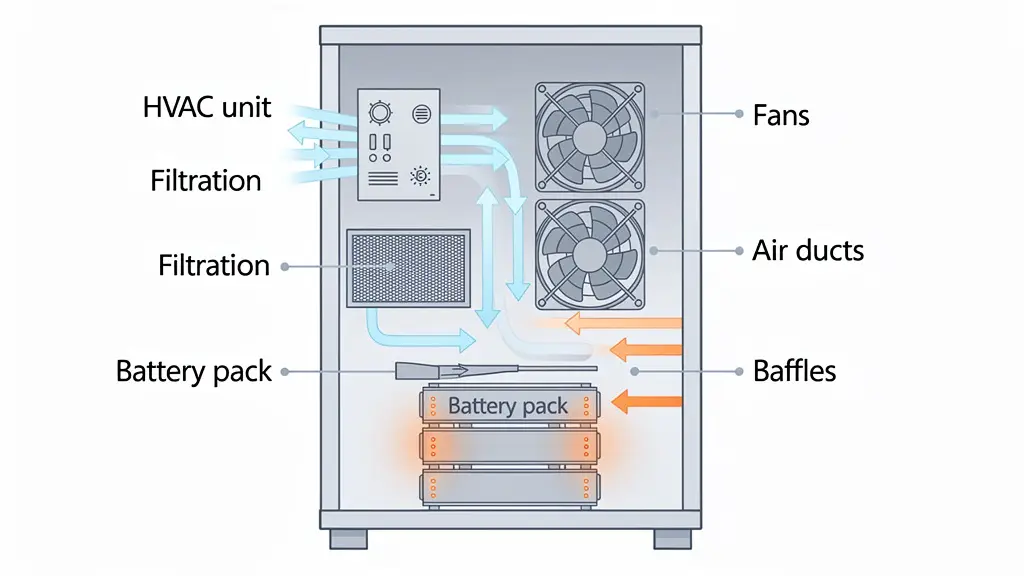
HVAC Unit: The heart of the system, comprising a compressor, condenser, and evaporator. This unit physically chills the air.
Industrial Fans / Blowers: High-CFM (Cubic Feet per Minute) fans force the chilled air through the energy storage cabinet.
Air Ducts and Baffles: Sheet metal or plastic guides that direct the airflow over the hottest parts of the lithium-ion battery pack.
Filtration System: If the system draws in outside air, it requires heavy-duty HEPA filters to prevent dust and debris from destroying the sensitive electronics inside.
What are the benefits of air cooling for the Energy Storage Cabinet?
While I lean toward liquid cooling for heavy-duty applications, air cooling still has a place in the market. Here are its main advantages:
Zero Leakage Risk: The most obvious benefit is safety from fluid leaks. If an air cooling system fails, you lose airflow. If a liquid system suffers a catastrophic puncture, you could dump conductive coolant over high-voltage components.
Lower Upfront Cost: Air cooling architecture is inherently simpler to design and manufacture. You don’t need precision CNC-machined enclosures or complex fluid manifolds.
Simplified Maintenance: If a fan dies, a technician can swap it out in ten minutes. Maintaining an air-cooled system rarely requires specialized plumbing knowledge or coolant flushing.
What are the disadvantages of air cooling for the Energy Storage Cabinet?
For demanding real-world applications, air cooling often falls short 3. Here is why you might want to avoid it:
Poor Temperature Uniformity: Air naturally warms up as it travels through the battery pack enclosure. By the time the air reaches the back of the pack, it is already hot. This creates severe temperature imbalances, causing the cells at the back to degrade much faster than the ones at the front.
Massive Footprint: To move enough air to cool a high-power ESS, you need massive fans and wide air ducts. This severely reduces the volumetric energy density of your energy storage cabinet.
Inefficient for High C-Rates: Air simply cannot absorb heat fast enough during ultra-fast charging or discharging. If you push the power capacity too high, an air-cooled system will force the BMS to throttle the power to prevent thermal runaway.
Condensation Risks: In humid environments, chilling the air inside the cabinet can lead to condensation forming directly on the battery terminals, creating severe electrical hazard risks.
What are the key parameters of the cooling system for the Energy Storage Cabinet?
When evaluating thermal management options for an ESS, you need to analyze the data. Keep a close eye on these engineering parameters:
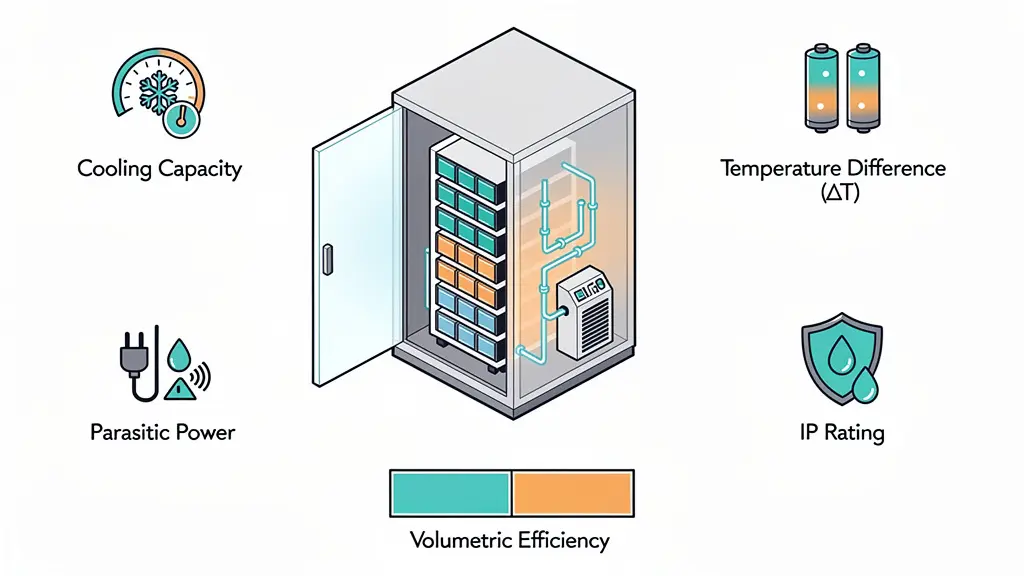
Cooling Capacity (kW): This is the sheer amount of thermal energy the system can remove. It must exceed the maximum heat generated by the lithium-ion battery pack at its highest operational load.
Temperature Difference (ΔT): The maximum temperature variance between any two cells in the pack. You want a system that keeps ΔT under 3°C.
Parasitic Power Consumption: How much of your stored energy does the cooling system consume to run its pumps, compressors, and fans? A lower parasitic draw means higher overall system efficiency.
IP Rating: The ingress protection level of the battery pack enclosure. For marine, off-highway, or heavy-duty environments, you need IP67+ to ensure reliability. Air cooling makes achieving high IP ratings exceptionally difficult.
Volumetric Efficiency: How much of the energy storage cabinet is dedicated to batteries versus cooling equipment?
How to choose the right cooling system for the Energy Storage Cabinet?
Choosing between a liquid cooling plate and air cooling comes down to understanding your specific application, operating profile, packaging constraints, and electrical targets.
You might want to choose Air Cooling if:
Your ESS has a relatively low power capacity (C-rate < 0.5C).
Your energy storage cabinet will operate in a mild, climate-controlled environment.
Upfront capital expenditure is your primary constraint, and you have plenty of physical space to spare.
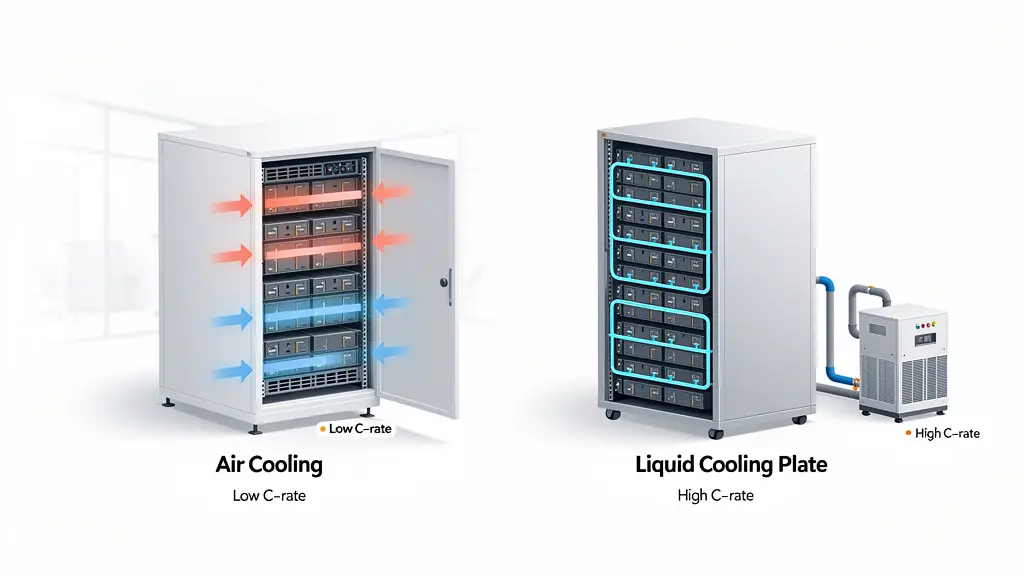
You absolutely need a Liquid Cooling Plate if:
You are building a high-density, utility-scale ESS project that requires large-scale battery packs and complex PDUs/BMS.
Your application demands fast charging and high continuous discharge rates.
You need to deploy the system in harsh environments that require a fully sealed, rugged IP67+ aluminum enclosure.
You are trying to pack maximum power capacity into the smallest possible footprint.
Tier-1 cell manufacturers will gladly sell you standard volume cells, but they leave you with a massive engineering headache regarding how to properly cool and package them safely. This is exactly where working with an engineering-first integration partner changes the game.
By partnering with integration experts, you can utilize a transparent “Bring Your Own Cells/Modules” model. You secure the raw modules at zero middleman markup, while the engineering partner designs the precision liquid cold plates, intelligent BMS architectures, and high-voltage PDUs tailored specifically for your energy storage cabinet.
Conclusion
The debate between liquid cooling plates and air cooling ultimately hinges on your power density requirements. As ESS platforms push toward higher power capacities and smaller footprints, liquid cooling is rapidly becoming the industry standard.
If you are a CTO, Chief Engineer, or Program Manager struggling with thermal management, do not let your project fail at the integration stage. We support customers from concept and engineering through testing, certification, and final commissioning.
If you are ready to master the engineering of your next energy storage cabinet, reach out to us to discuss your thermal architecture and integration need
