

Integration failures suck. You’ve procured raw modules, but failing homologation ruins your timeline. I know firsthand that battery projects often fail at the integration stage because mechanical, thermal, and electrical systems are not developed as one coordinated solution. Here is exactly what you need.
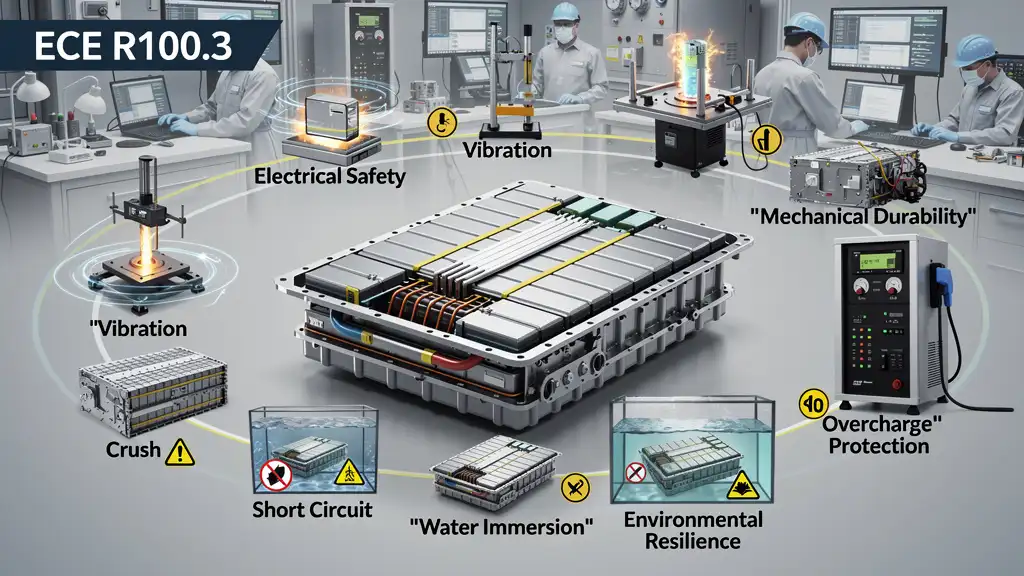
ECE R100.3 certification requires passing 15 critical safety tests for lithium-ion battery systems. These evaluate electrical safety, mechanical durability, and environmental resilience, including thermal propagation, vibration, crush, short circuit, water immersion, and overcharge protection.
Ready to get your custom battery pack certified for the global market? Let’s dive into the 15 brutal tests your system must survive.
1 Vibration Test
If you are building a 50-ton mining truck or an off-highway tractor, vibration is your worst enemy.
Heavy trucks have high demands for battery pack durability, liquid cooling, and high-voltage integration. The ECE R100.3 vibration test physically shakes your lithium-ion battery pack on a massive shaker table for hours. It sweeps through frequencies from 7 Hz to 50 Hz to simulate grueling real-world road profiles.
If your internal busbars snap or your cells shift, you fail.
You need a rigid housing that dampens the mechanical load. Our in-house engineering team designs rugged IP67+ aluminum enclosures tailored to survive these exact harmonic frequencies.

2 Thermal Shock & Cycling
Imagine a marine vessel operating in freezing waters, then charging under the blazing sun.
This rapid temperature change causes internal materials to expand and contract violently. The thermal shock test cycles the battery pack from -40°C to +60°C repeatedly. If your enclosure seals degrade, moisture gets in.
To beat this, you need a top-tier thermal management strategy. This is where precision liquid cold plates save the day. They minimize the temperature delta across the pack, preventing localized thermal stress.
Electric boats and ferries have stringent requirements for waterproofing, liquid cooling, and system integration. If managing extreme temperatures is a hurdle for your team, bringing in an engineering-driven integration partner might be a good move.

3 Mechanical Shock
Potholes. Curbs. Sudden drops.
Mechanical shock tests simulate these sudden, high-G impact events. A sled accelerates the battery pack violently, hitting up to 50G in a matter of milliseconds. The internal cells must stay securely in place without shorting out.
Off-highway and construction equipment OEMs develop battery-powered platforms for highly demanding applications. Their environments are unforgiving.
Using aerospace-grade structural adhesives and compression pads inside your battery pack enclosure ensures the modules never move, even when the vehicle takes a massive hit.

4 Mechanical Integrity (Crush / Drop)
What happens during a severe vehicle collision?
The mechanical integrity test forces a 100kN crushing plate directly into the battery pack enclosure. It is a brutal, unforgiving test. Your enclosure must deform safely without piercing the lithium-ion cells.
If the cells get crushed, you risk catastrophic thermal runaway.
How do you package them safely? You need thick, well-designed crash structures. We leverage CNC-machined enclosures with internal extruded ribs to absorb the kinetic energy of a crash 3.

5 Fire Resistance (External Fire)
This is literally trial by fire.
The battery pack is placed directly over a pool of burning fuel for two solid minutes. The goal is simple: the pack cannot explode.
Mining vehicles demand highly reliable, explosion-proof, and heavy-duty battery systems. You must use advanced fire-retardant materials like mica sheets or aerogel inside the enclosure. These materials block the extreme external heat from cooking the lithium-ion cells.
Our business exists to help customers reduce integration risk, shorten development cycles, and bring battery-powered platforms into operation with greater confidence. Passing the fire test is a massive part of that confidence.
6 External Short Circuit Protection
A technician accidentally drops a metal wrench across your high-voltage terminals.
Boom.
That is exactly what this test simulates. A massive external short circuit (often less than 5 milliohms of resistance) is applied to the battery. Your High Voltage (HV) architecture must detect the massive current spike and open the contactors immediately.
We master the deep engineering of high-voltage PDUs and intelligent BMS architectures to catch these spikes in milliseconds. If the system doesn’t trip, the cables will literally melt.

7 Overcharge Protection
Overcharging a lithium-ion battery is incredibly dangerous.
It causes the internal electrolyte to boil, the cell to expand, and eventually leads to an explosive fire. The R100.3 standard requires your Battery Management System (BMS) to forcefully stop the charging process before safety limits are breached.
This is where intelligent controls matter. We combine enclosure engineering, thermal management, HV architecture, intelligent controls, and commissioning support in one coordinated workflow. Your BMS needs rock-solid software to talk to the charger and shut the contactors down instantly.

8 Over-discharge Protection
Draining a battery too much doesn’t sound as scary as overcharging.
But it is.
Deep discharging causes the copper current collectors inside the cell to dissolve. When you recharge it later, that dissolved copper creates internal micro-shorts. Your BMS must cut off power output before the voltage drops to a critical level.
Typical contacts we work with, like a VCU / Controls Engineer, rely on the BMS to communicate these limits clearly to the vehicle.
9 Over-temperature Protection
EV batteries hate extreme heat.
Fast charging and heavy towing generate massive thermal loads. The over-temperature test ensures your battery won’t keep operating when things get dangerously hot. The BMS must throttle power or shut down completely.
But shutting down a marine vessel in open water is a huge safety risk. Marine vessel builders and integrators need active cooling to prevent ever reaching that shut-down temperature.
This is why precision liquid cold plates are non-negotiable. They pull heat away from the cells fast enough to keep the BMS from ever hitting the panic button.

10 Water Immersion (IP Test)
Water and 800-volt systems do not play nicely together.
R100.3 requires the battery to survive water immersion without any ingress. This is verified through an IP67 or IP68 test. Your gaskets, connectors, and breather valves must be absolutely perfect.
Electric boats and ferries have stringent requirements for waterproofing, liquid cooling, and system integration.
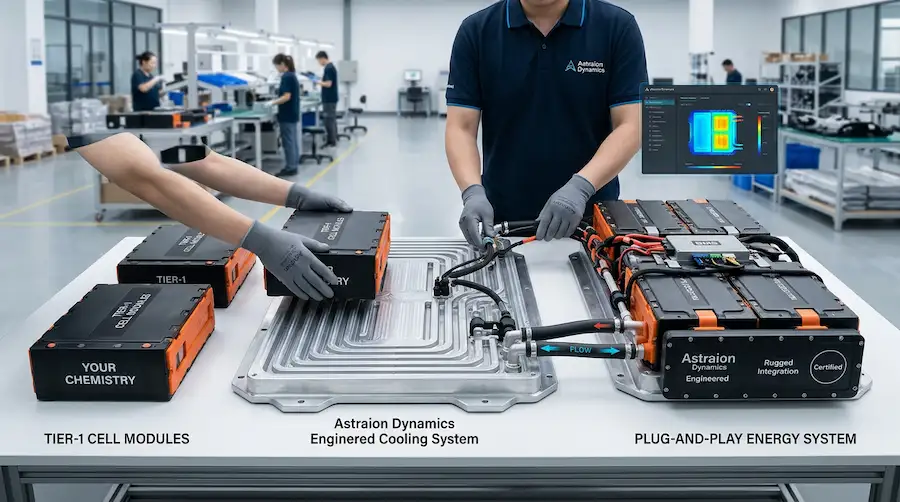
Astraion Dynamics is a turnkey integration partner for lithium-ion battery power systems serving heavy-duty, marine, and off-highway applications. We deliver fully integrated, plug-and-play battery systems built for real-world operation.

11 Isolation Resistance Test
High voltage must stay completely isolated from the vehicle chassis.
If it isn’t, the chassis becomes electrified, posing a lethal risk to operators. The isolation resistance test uses a megohmmeter to ensure the resistance between the high-voltage bus and the chassis is at least 100 Ω/V (or 500 Ω/V for AC buses).
Insulation breakdown usually happens over time or after intense vibration. If you want to pass this, you need top-tier wiring harnesses and highly rated high-voltage connectors.
12 Electrical Shock Protection
This test makes sure humans cannot accidentally touch live high-voltage components.
Testers use a joint mechanical test finger (IPXXB) to poke around the battery pack. If the finger can touch a live busbar through a gap in the enclosure, you fail instantly.
Every single service panel and connector must be properly shielded. As an engineering-first integrator, we transform your procured raw modules into a rugged, fully certified, plug-and-play energy system. We ensure every inch of the enclosure is touch-safe.
13 Venting / Electrolyte Leakage
If a cell gets overstressed, it vents toxic and highly flammable gases.
Your battery pack enclosure must safely direct these gases outside. You cannot allow toxic electrolytes to pool inside the pack or leak into the passenger cabin.
Tier-1 cell manufacturers are built for massive standard volume, often rejecting deep customization for off-highway, marine, or specialized commercial fleets. They sell you the raw modules, but they leave you with a massive engineering headache.
You must design proper venting channels and one-way pressure relief valves. This application-driven engineering is built around real platform constraints.

14 Charging Control
DC fast chargers pump massive amounts of energy into your battery.
The vehicle and the battery must perfectly orchestrate this flow. If the charger goes rogue and ignores voltage limits, the battery must forcefully disconnect itself. This requires a flawless communication handshake between the BMS and the charger.
Energy Storage System (ESS) projects require large-scale battery packs, PDUs/BMS, and thorough testing.
We integrate key mechanical, thermal, electrical, and control elements, and support validation, commissioning, and final deployment. A smart BMS architecture guarantees this charging handshake never fails.
15 Thermal Propagation (cell failure)
This is the hardest test in the entire ECE R100.3 standard.
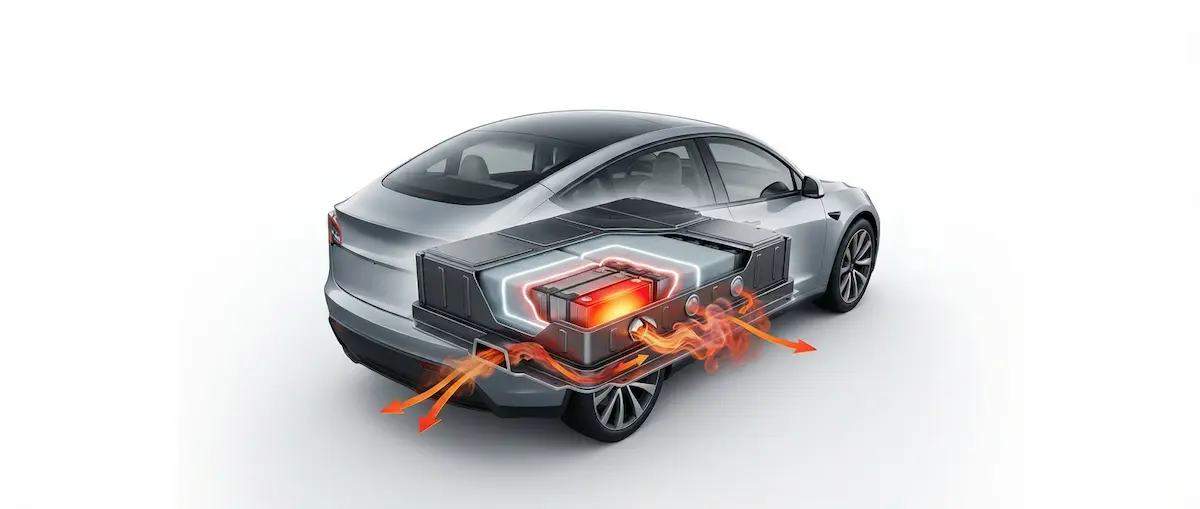
You intentionally force a single cell into thermal runaway using a massive heater or a nail penetration. The rule? The fire cannot spread to the rest of the pack, and no hazardous smoke can enter the cabin for at least 5 minutes. This critical window gives passengers time to escape.
Containing a 600°C cell failure requires a perfect marriage of advanced thermal barrier materials (like aerogel) and active cooling.
You negotiate directly with top cell manufacturers to secure raw modules at zero middleman markup, while we master the deep engineering and complex supply chain ecosystem.
If your team is struggling to pass this specific test, reaching out to an integration partner might be your best option to stay on schedule.
Conclusion
Applying these 15 testing insights will drastically reduce your homologation risks. ECE R100.3 is tough, but integrating rugged enclosures, intelligent BMS, and precision liquid cold plates ensures your battery-powered platforms deploy reliably. Need to guarantee a pass? Our engineering team might be exactly what you need.
