
Vacuum Brazed
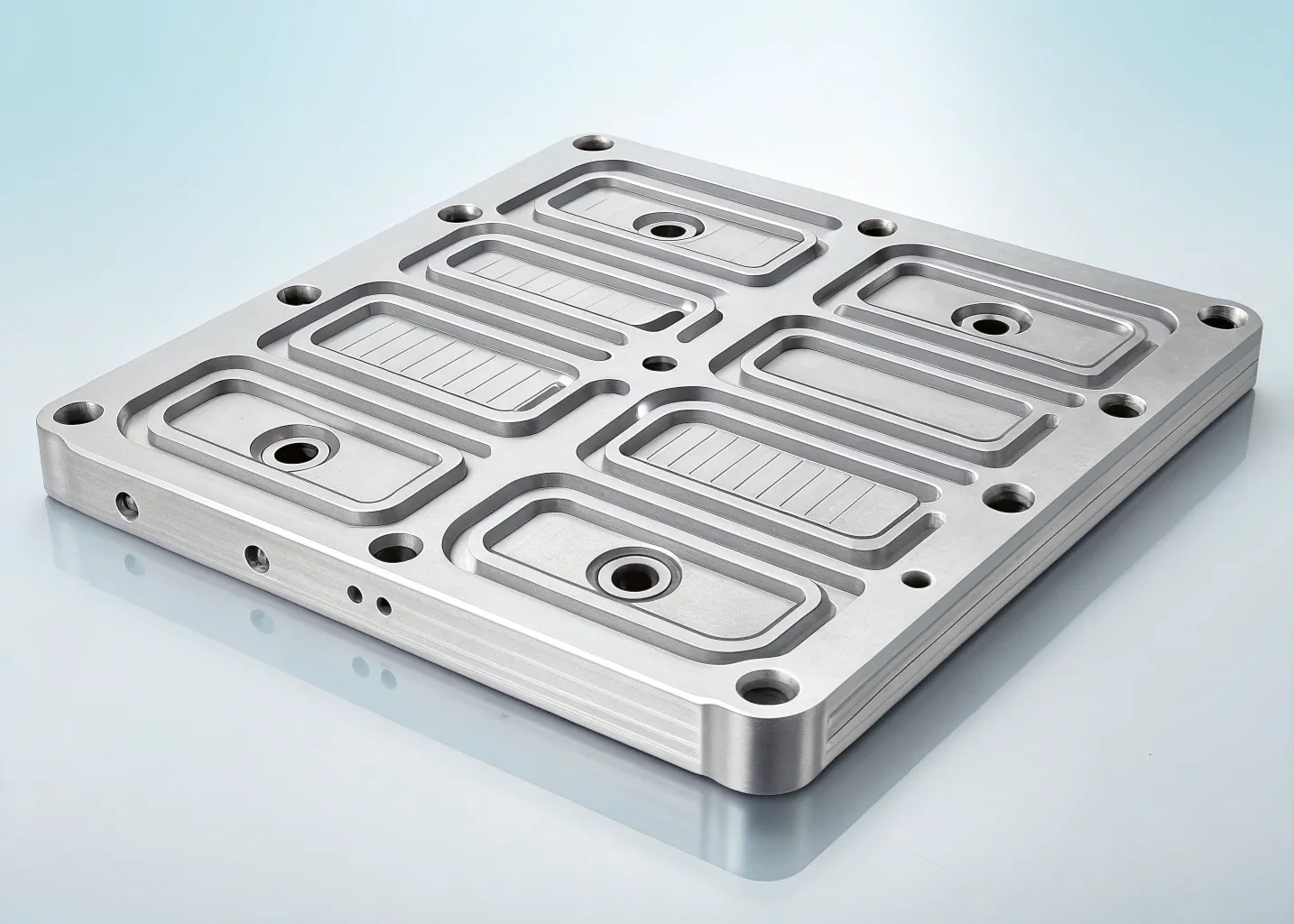
High-performance thermal management solutions using advanced vacuum brazing technology. Superior heat dissipation, leak-proof design, and exceptional durability for EV battery systems and power electronics.
Performance Summary
Industry-leading thermal and mechanical performance specifications
Thermal Performance
Mechanical Performance
Vacuum Brazing Process
Advanced manufacturing process ensuring superior joint quality and performance
Component Preparation
Precision CNC machining of aluminum plates and flow channels with brazing filler material placement
Assembly & Fixturing
Precise alignment and fixturing of components with brazing alloy positioned at joint interfaces
Vacuum Brazing
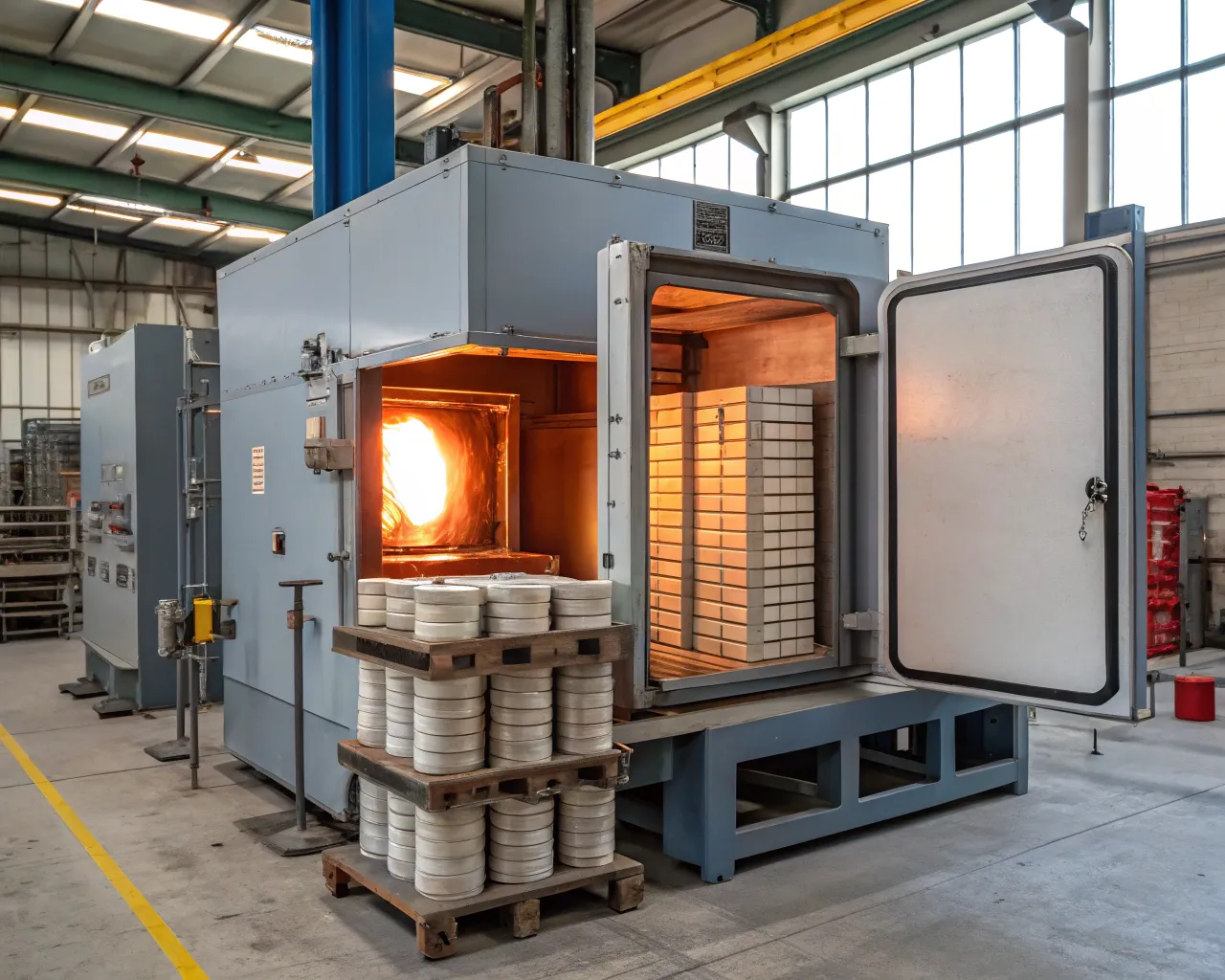
High-temperature brazing in controlled vacuum environment (580-620°C) ensuring clean, strong joints
Quality Inspection
Comprehensive testing including helium leak testing, pressure testing, and dimensional verification
Cooling Plate Types
Comprehensive range of vacuum brazed cooling solutions
Single-Layer Brazed
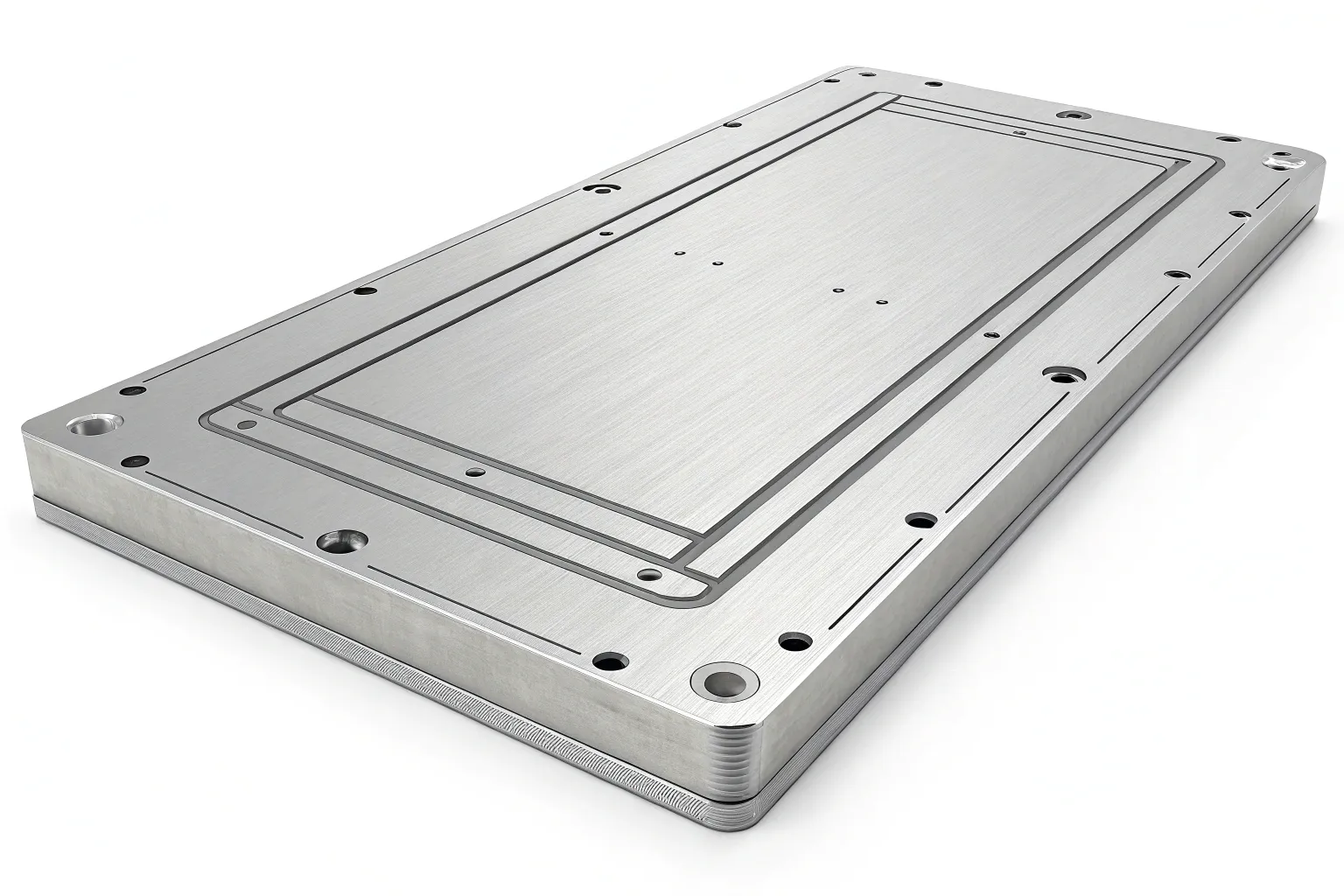
Simple, cost-effective design with single cooling channel layer. Ideal for moderate heat dissipation requirements.
- Cost-effective solution
- Quick manufacturing
- Moderate cooling capacity
Multi-Layer Brazed
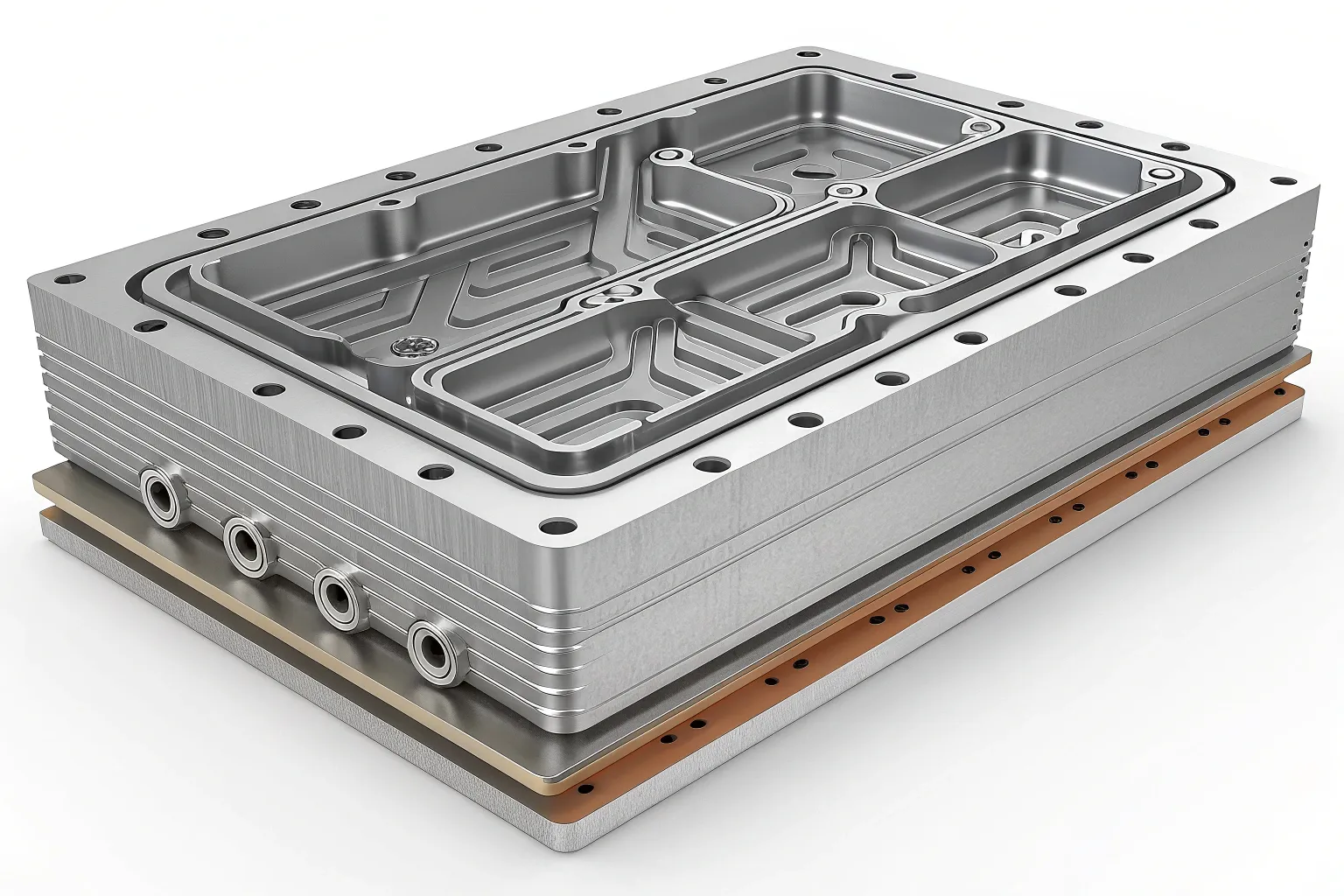
Advanced design with multiple cooling layers for enhanced heat transfer. Perfect for high-performance applications.
- Superior cooling performance
- Complex flow patterns
- High heat flux capability
Micro-Channel Brazed
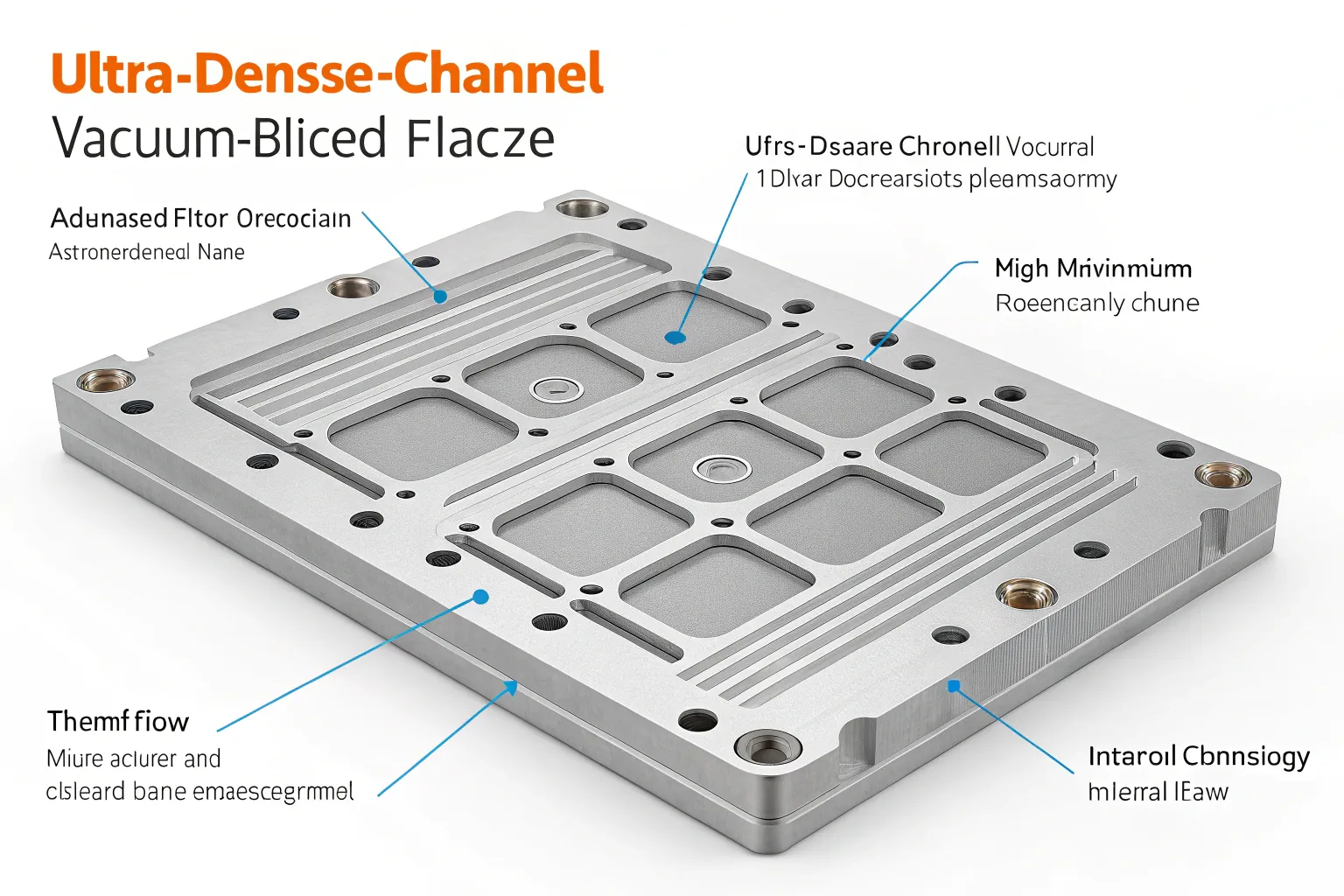
Ultra-high density micro-channels for maximum heat transfer. Optimal for extreme cooling requirements.
- Maximum heat transfer
- Compact design
- Precision manufacturing
Engineering Advantages
Superior performance through advanced vacuum brazing technology
Superior Strength
Vacuum brazing creates metallurgical bonds stronger than base materials, ensuring long-term reliability under thermal and mechanical stress.
Thermal Conductivity
Excellent thermal conductivity through continuous aluminum matrix without thermal barriers, optimizing heat transfer efficiency.
100% Leak-Proof
Hermetic sealing through complete joint penetration ensures zero leakage under extreme pressure and temperature conditions.
Manufacturing Capabilities
State-of-the-art equipment and comprehensive manufacturing services
Vacuum Brazing Furnace
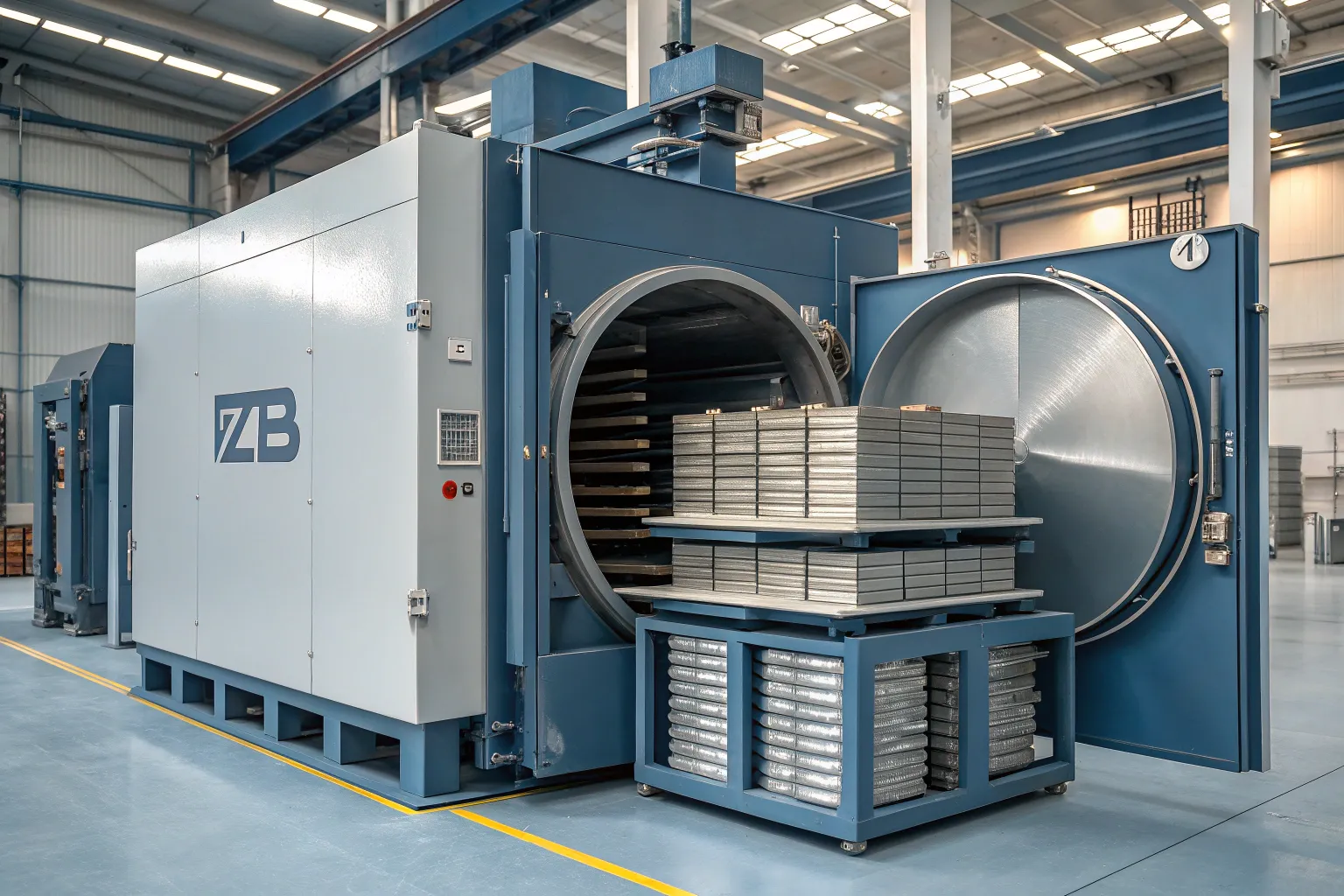
- Working chamber: 1200×800×600mm
- Temperature range: 200-700°C
- Vacuum level: 10⁻⁴ Pa
- Temperature uniformity: ±5°C
CNC Precision Machining
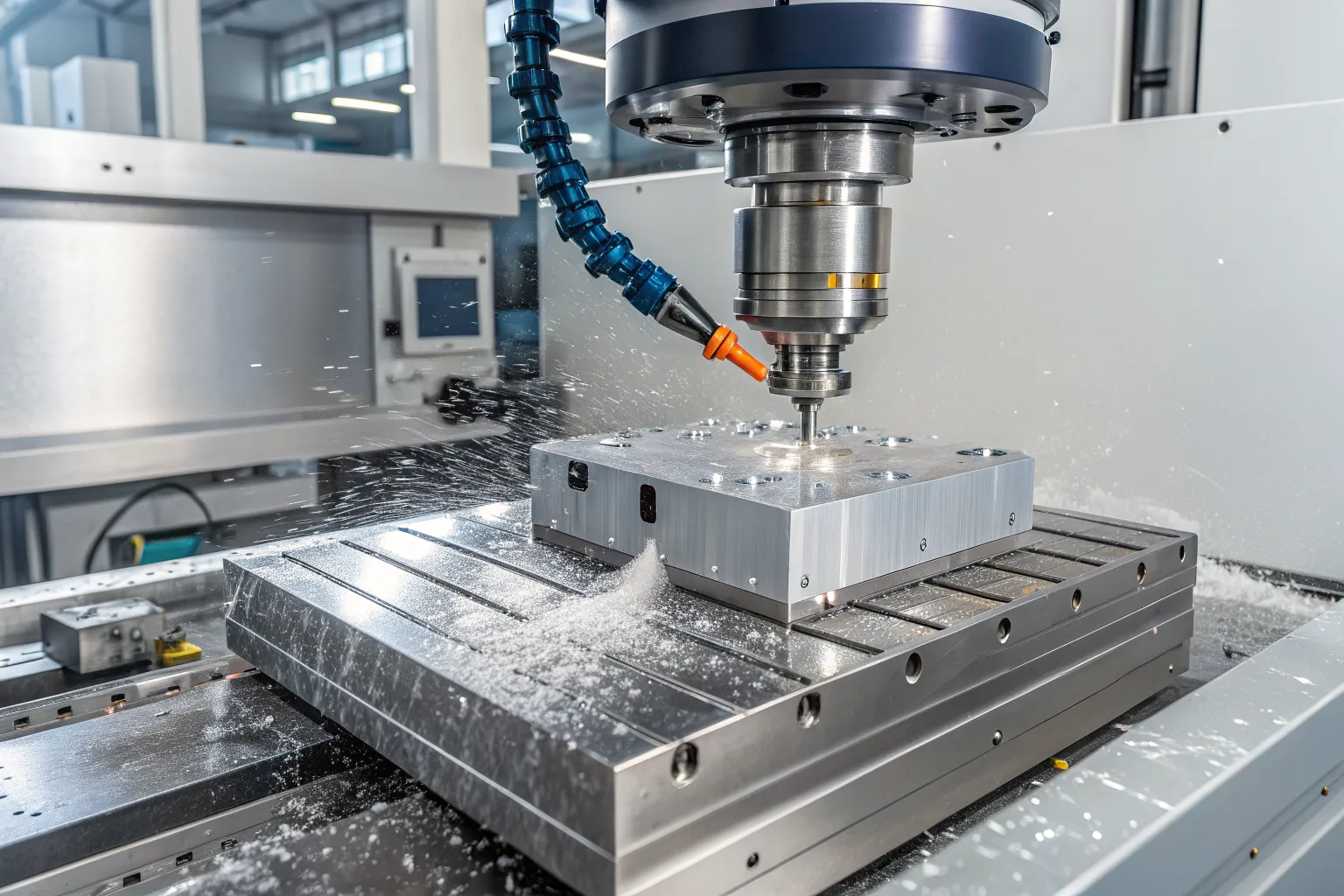
- 5-axis CNC machining centers
- Tolerance: ±0.02mm
- Max workpiece: 1500×1000×500mm
- Surface finish: Ra0.8μm
Assembly Services
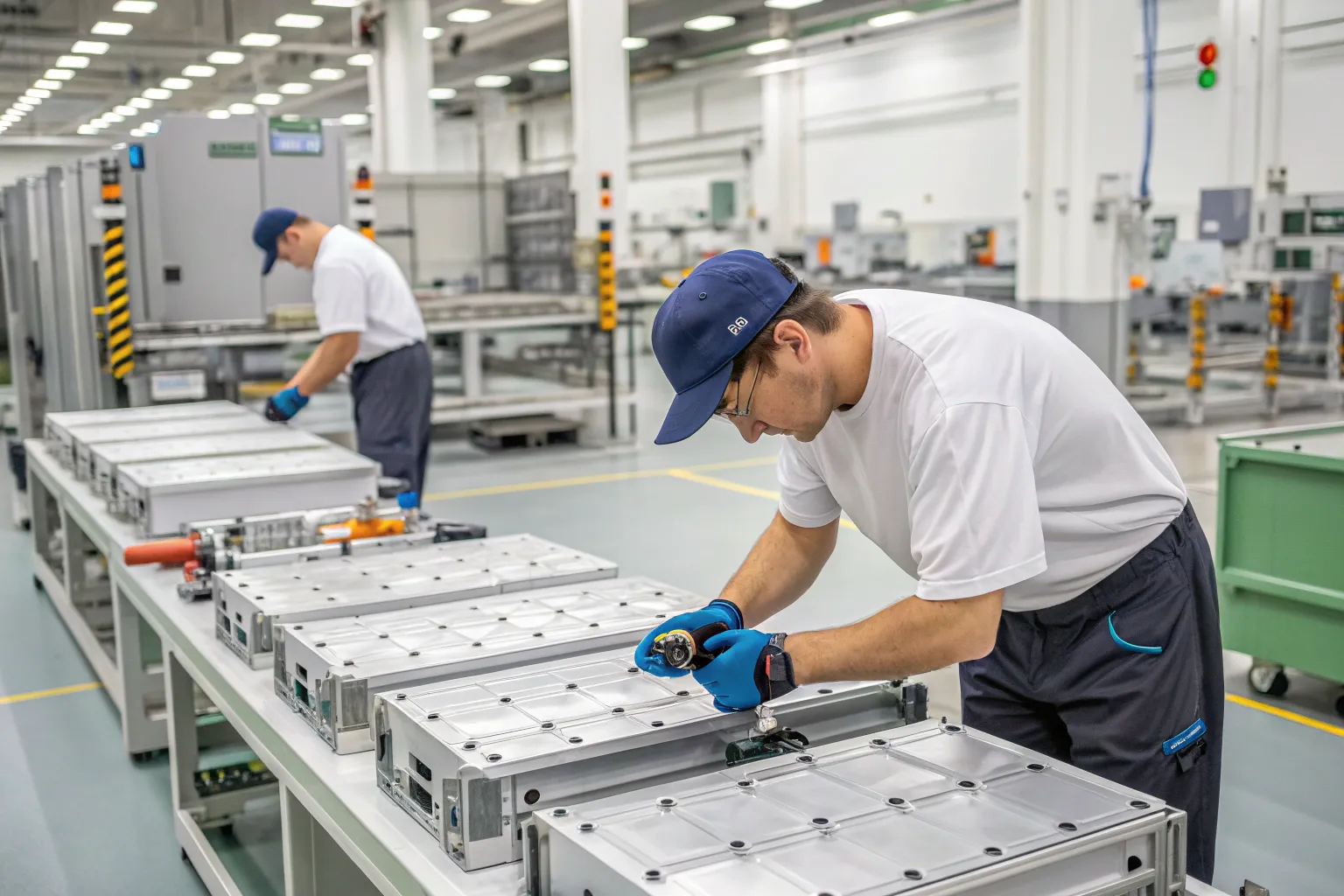
- Complete sub-assembly services
- Inlet/outlet fitting installation
- Pressure testing & validation
- Custom packaging & shipping
Testing & Validation
Comprehensive quality assurance and performance validation
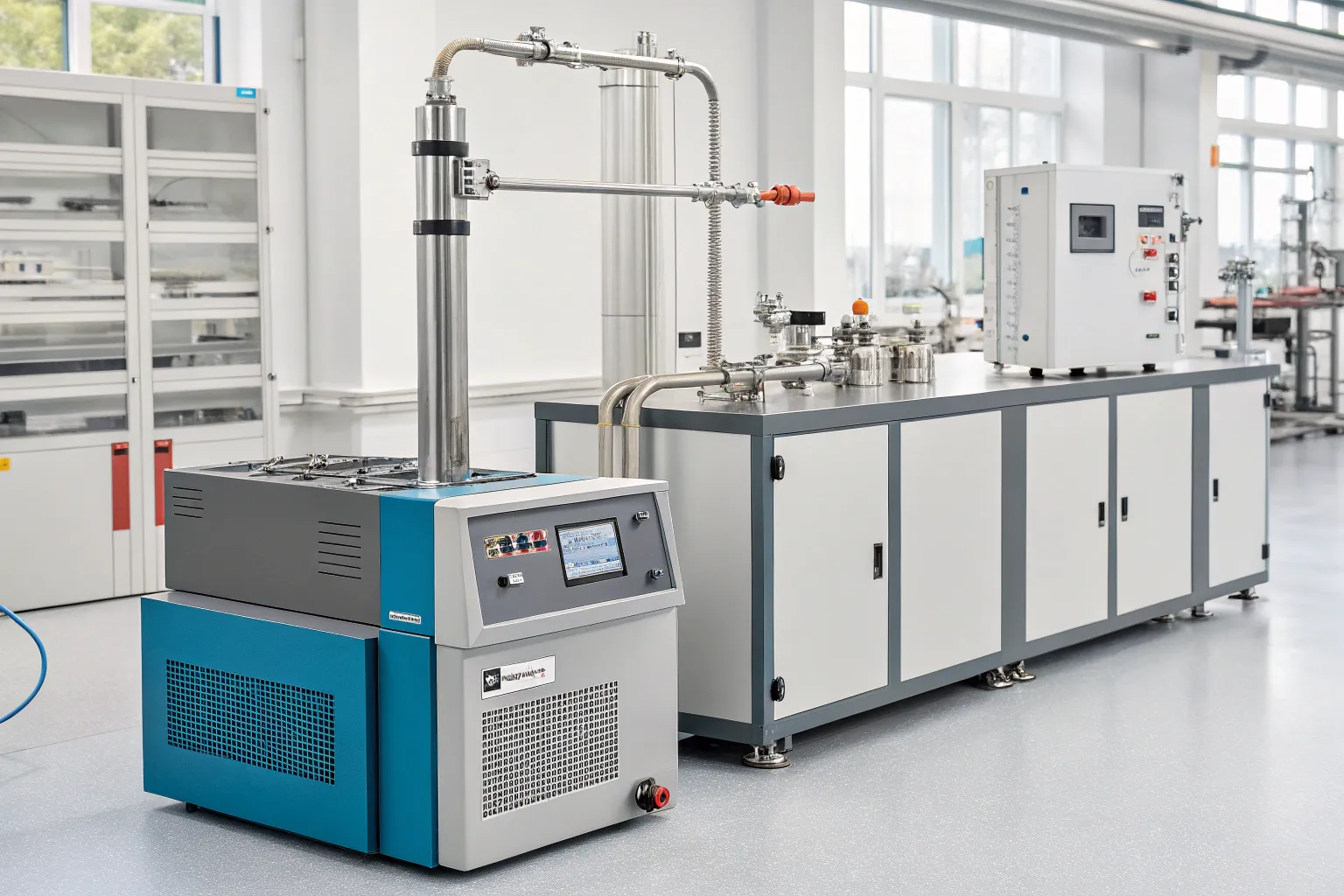
Helium Leak Testing
Ultra-sensitive helium mass spectrometer testing ensures zero leakage detection
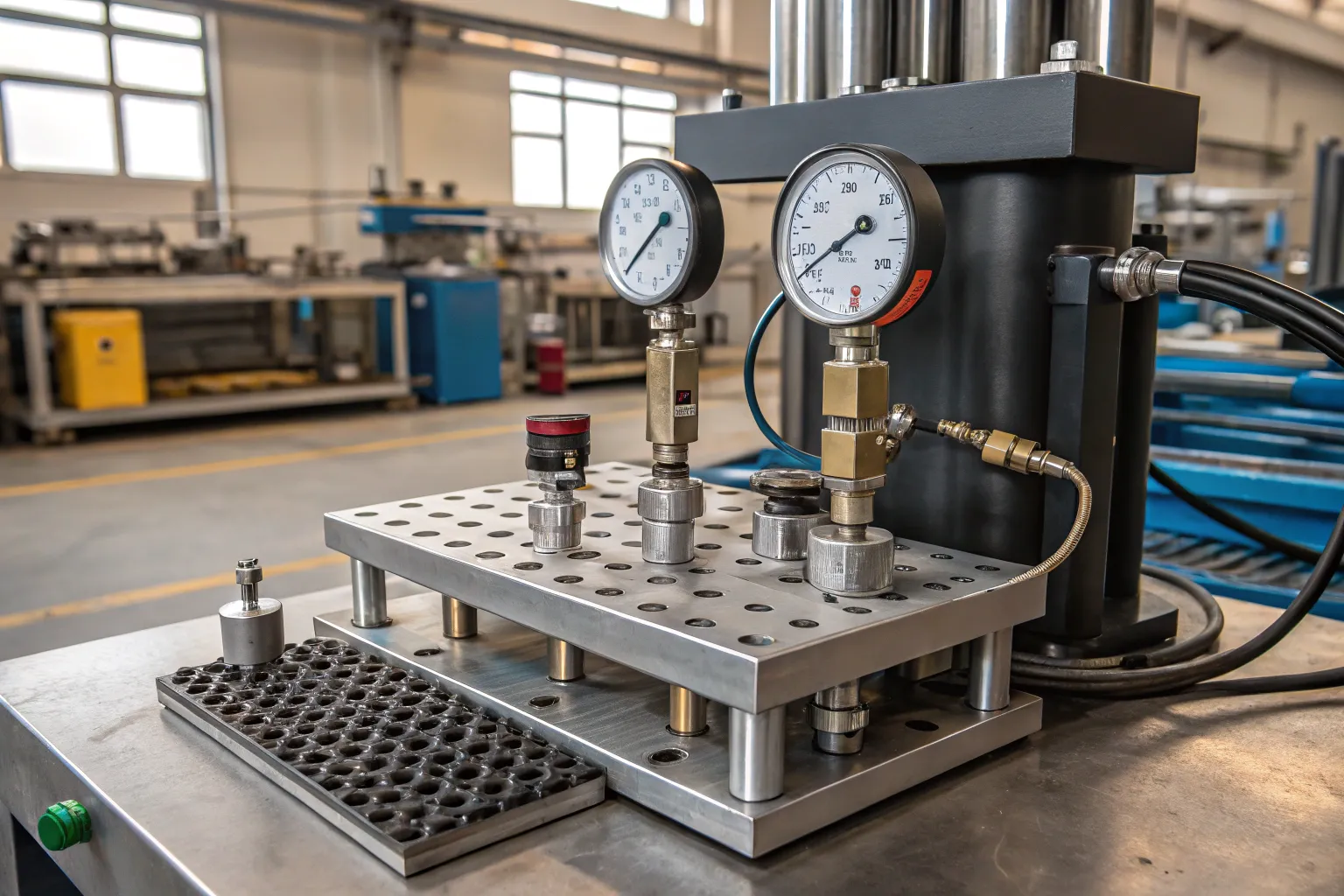
Pressure Testing
Hydrostatic and pneumatic pressure testing to validate structural integrity
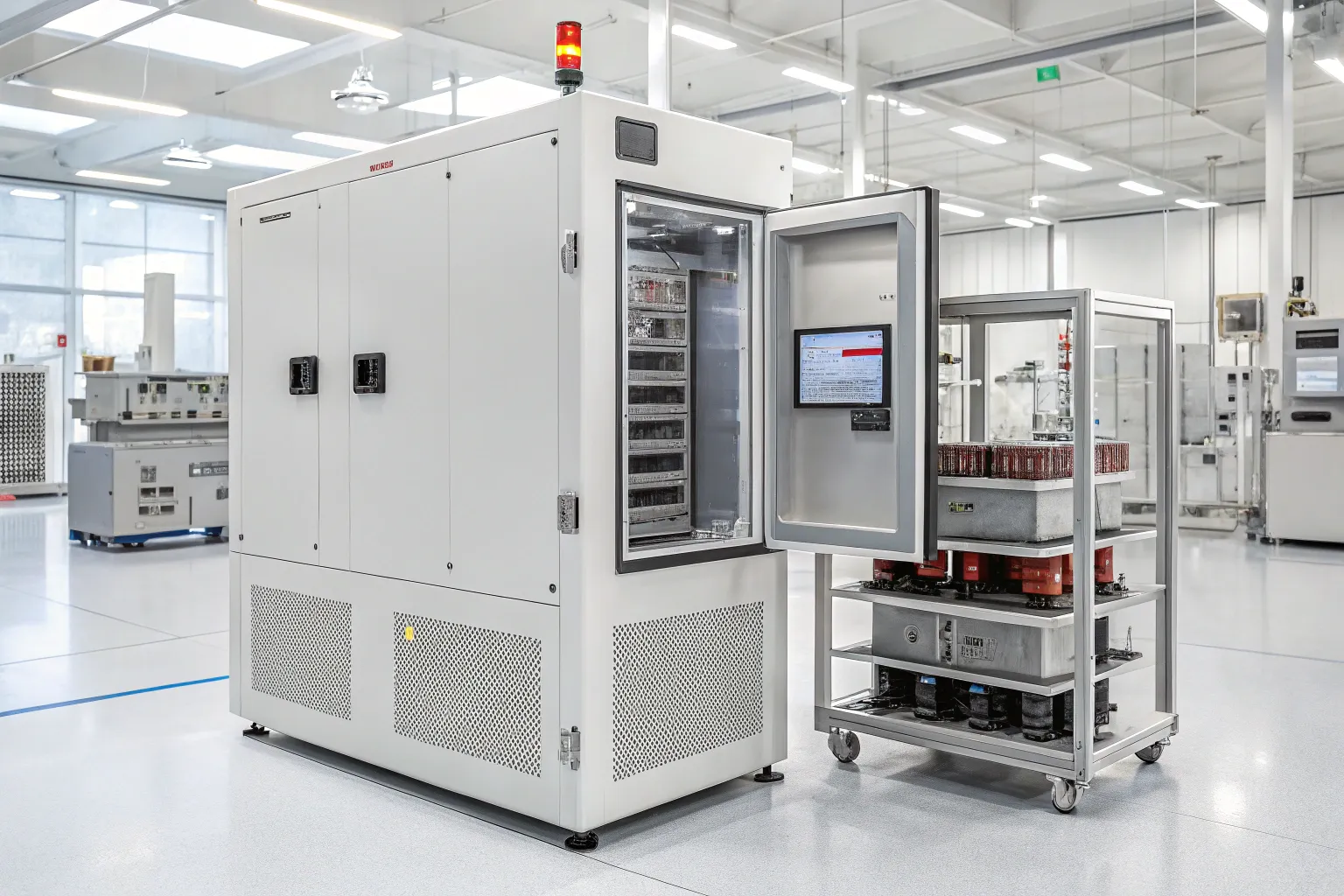
Thermal Cycling
Accelerated thermal cycling tests to validate long-term reliability and durability
Applications
Versatile cooling solutions across multiple industries
Electric Vehicles
- Battery pack cooling
- Motor controller cooling
- Onboard charger cooling
- DC-DC converter cooling
Energy Storage
- Grid-scale ESS cooling
- Container ESS systems
- Commercial ESS cooling
- Residential battery cooling
Power Electronics
- IGBT module cooling
- Inverter cooling systems
- Rectifier cooling
- UPS system cooling
Industrial Equipment
- Laser system cooling
- Welding equipment cooling
- Medical device cooling
- Semiconductor equipment
Case Studies
Real-world success stories of our vacuum brazed cooling solutions
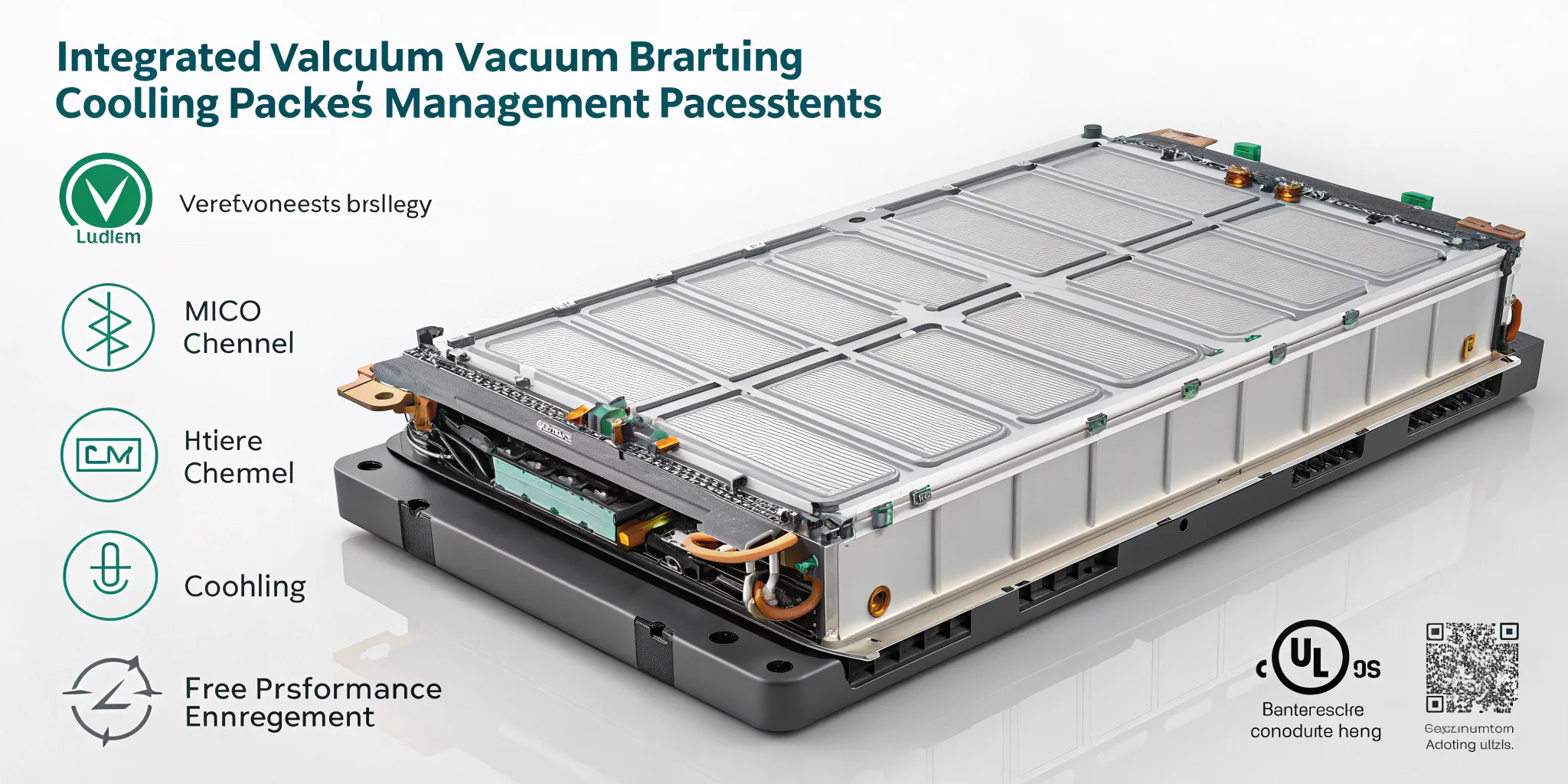
High-Performance EV Battery Cooling System
Developed multi-layer vacuum brazed cooling plates for premium electric vehicle manufacturer, achieving 30% better thermal performance than previous design while reducing weight by 15%.
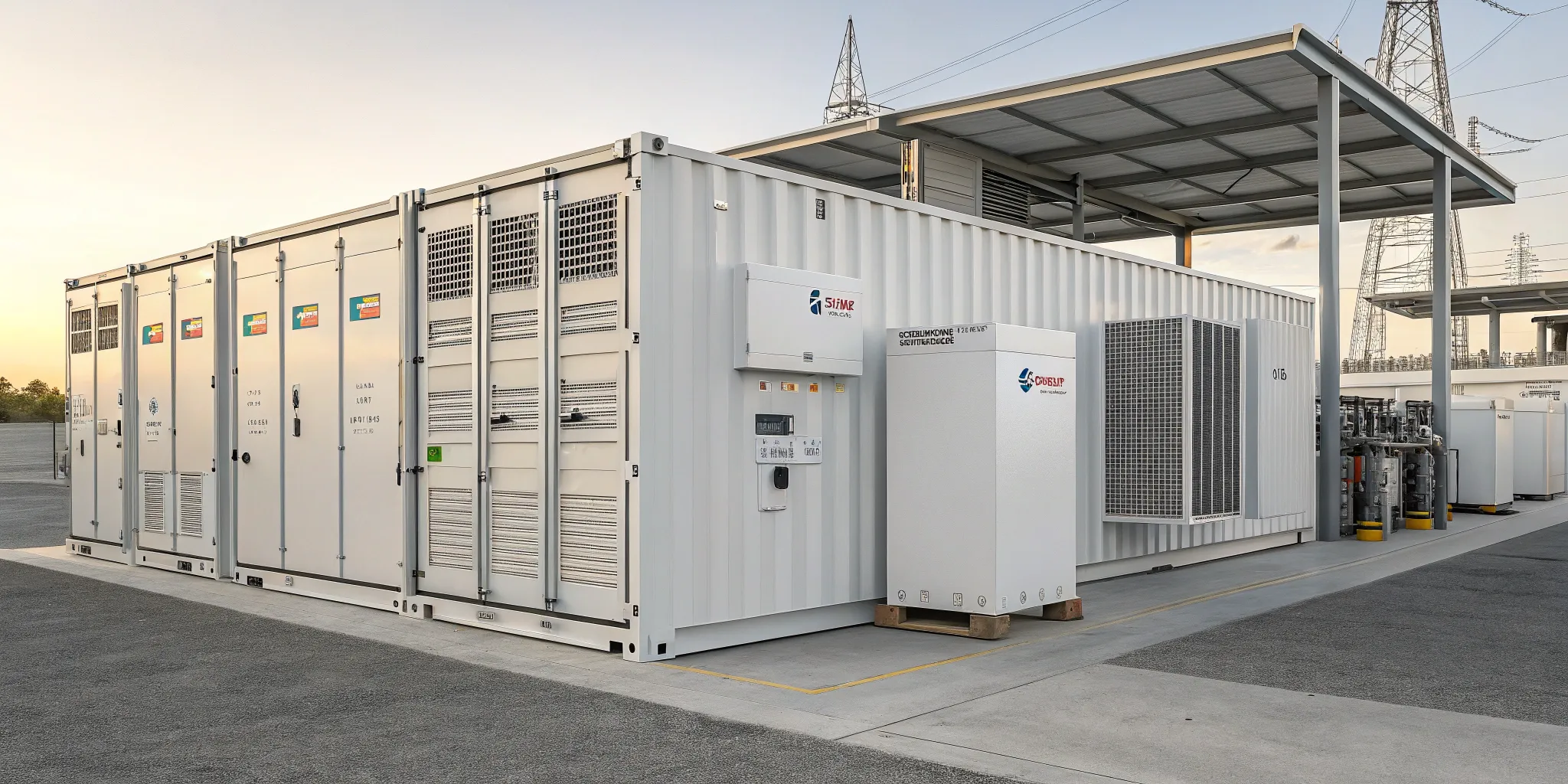
Grid-Scale ESS Thermal Management
Custom vacuum brazed cooling solution for large-scale energy storage system, ensuring optimal battery performance across wide temperature range while meeting stringent safety requirements.
Customization Guide
Design options and required input data for your custom cooling solution
Design Options
Channel Configuration
- Parallel flow channels
- Serpentine flow paths
- Pin-fin structures
- Micro-channel arrays
Material Options
- Al6061-T6 (Standard)
- Al5083-H111 (Marine grade)
- Al6063-T5 (Extrusion grade)
- Custom alloy specifications
Surface Treatments
- Anodizing (Type II/III)
- Chemical conversion coating
- Powder coating
- Passivation treatment
Required Input Data
Technical Specifications
Please provide the following information for accurate quotation
Dimensional Requirements
- • Overall dimensions (L×W×H)
- • Active cooling area
- • Thickness constraints
- • Mounting hole locations
Thermal Requirements
- • Heat dissipation (Watts)
- • Operating temperature range
- • Coolant type and flow rate
- • Pressure drop limitations
Project Details
- • Annual volume requirements
- • Quality standards/certifications
- • Timeline requirements
- • Special testing requirements
Technical FAQ
Brazing-specific engineering questions and answers
What are the advantages of vacuum brazing over other joining methods?
Vacuum brazing provides superior joint strength, excellent thermal conductivity, and hermetic sealing compared to welding or mechanical joining. The process creates metallurgical bonds that are often stronger than the base material, with no flux residue or contamination. The controlled atmosphere prevents oxidation, ensuring clean, reliable joints ideal for critical thermal management applications.
What is the typical lead time for vacuum brazed cooling plates?
Lead times vary based on complexity and volume. Prototype quantities typically require 3-4 weeks, including design review, tooling preparation, and manufacturing. Production quantities (100+ pieces) generally require 6-8 weeks. Complex multi-layer designs or special material requirements may extend lead times. We provide detailed scheduling during the quotation process.
What quality controls are implemented during vacuum brazing?
Our quality control includes pre-brazing dimensional inspection, furnace atmosphere monitoring, temperature profile recording, and post-brazing testing. Every part undergoes helium leak testing, pressure testing, and dimensional verification. We maintain detailed process records and can provide full traceability documentation including brazing certificates and test reports.
Can vacuum brazed joints be repaired if damaged?
Vacuum brazed joints are permanent and generally cannot be repaired without compromising the original joint integrity. However, the robust nature of brazed joints means they rarely fail under normal operating conditions. For critical applications, we recommend design redundancy or modular construction to enable component replacement if needed.
Ready for Superior Cooling Performance?
Upload your CAD files or contact us for a custom vacuum brazed cooling plate quote. Our engineering team is ready to optimize your thermal management solution.
Expert Engineering
15+ years vacuum brazing experience
Quality Assured
100% leak testing & full traceability
Global Shipping
Worldwide delivery & support